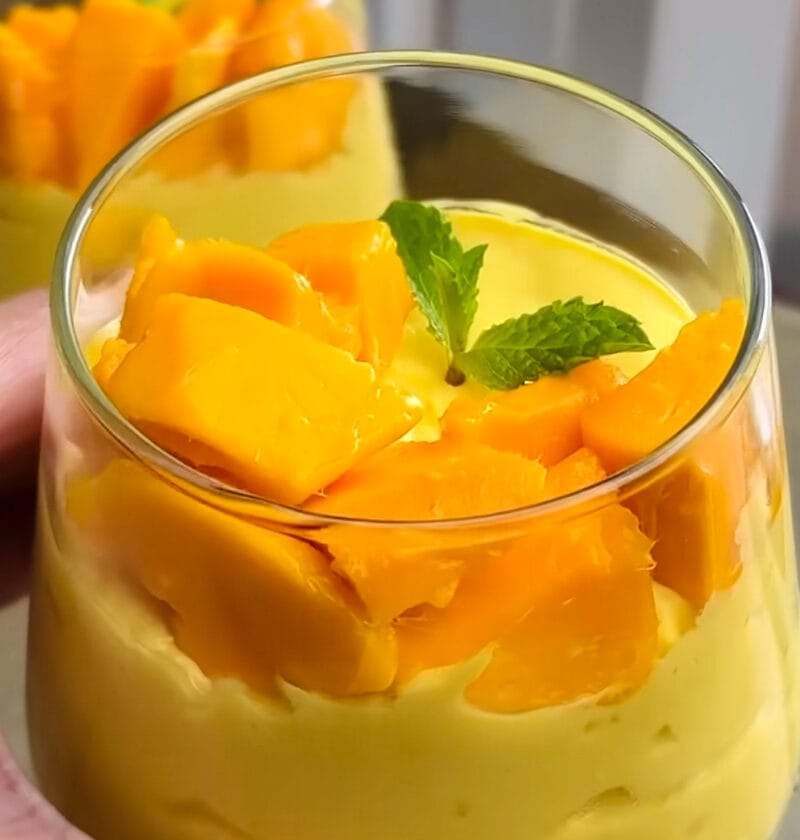
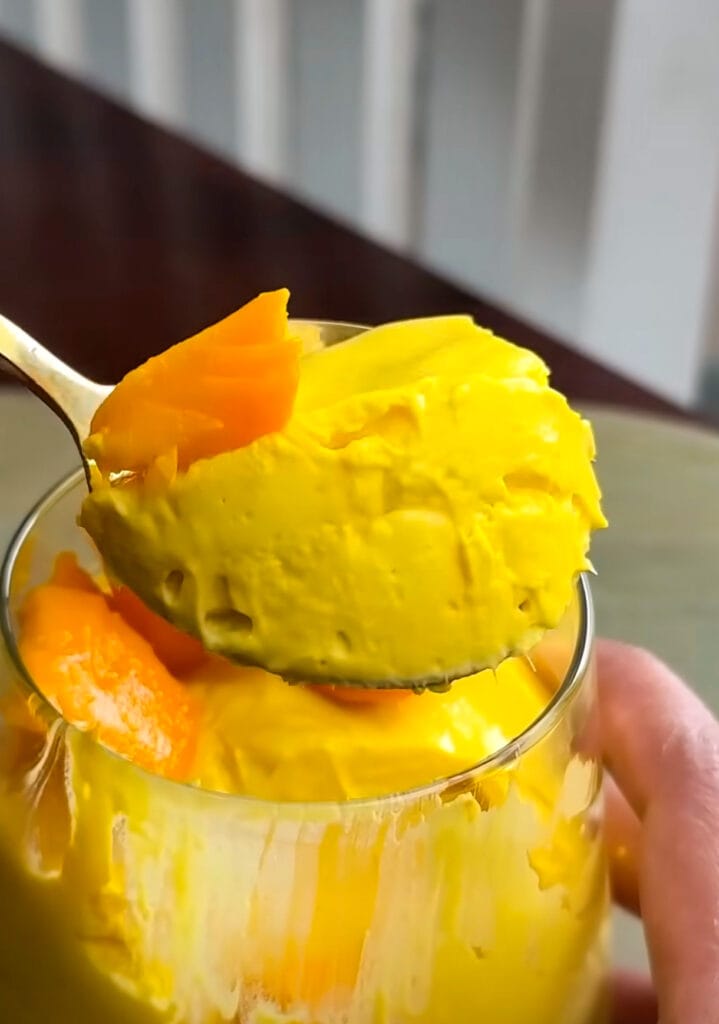
Often people think that the best desserts require a lot of time in the kitchen, or a special set of tools. It’s always assumed that something really amazing is complex. But what if I said, “You can make a sophisticated light and oh so yummy treat with very little work involved?” This tropical mango mousse is here to debunk the myth and deliver a sun-filled taste and a cloud-like consistency with no need for a culinary degree to prepare. Prepare for a dessert as easy to prepare, and delight to eat.
Tropical mango mousse
A cloud-like dessert that brightens any table with pure mango sunshine.
Ingredients
-
-
- 2 large ripe mangoes, peeled and pureed (about 1.5 cups puree)
-
- 1 ½ cups heavy cream, very cold
-
- ¼ cup granulated sugar (adjust to your mango’s sweetness)
-
- 1 tablespoon fresh lime juice
-
- 1 ½ teaspoons unflavored gelatin powder
-
- 2 tablespoons cold water
-
- Optional: Fresh mint leaves or extra mango cubes for garnish
-
Necessary Utensils & Equipment
-
-
-
- 2-3 large mixing bowls
-
- Electric hand mixer or stand mixer with whisk attachment
-
- Small saucepan
-
- Whisk
-
- Rubber spatula
-
- Measuring cups and spoons
-
- 6 individual serving glasses or ramekins
-
- Small fine-mesh sieve (optional, for mango puree)
-
-
Instructions
-
-
-
- Prepare the Mango Puree: Peel and pit your ripe mangoes. Dice the flesh and place it into a blender or food processor. Blend until completely smooth. If you prefer a silkier mousse, press the puree through a fine-mesh sieve to remove any remaining fibers. Set aside.
-
- Bloom the Gelatin: Pour the cold water into a small, heatproof bowl. Sprinkle the gelatin powder evenly over the water. Let it sit undisturbed for 5 minutes. This allows the gelatin granules to swell and soften, a step known as “blooming.”
-
- Dissolve the Gelatin: Gently heat the bloomed gelatin. You can do this by placing the bowl over a small saucepan of simmering water (a double boiler method) or by microwaving it for 10-15 seconds. Stir until the gelatin is fully dissolved and clear. Make sure there are no grainy bits left. Let it cool slightly, but don’t let it set.
-
- Combine Mango and Gelatin: In a medium mixing bowl, combine the cooled dissolved gelatin, mango puree, granulated sugar, and lime juice. Whisk until everything is well combined and the sugar has dissolved. Taste and adjust sugar or lime juice if you feel it needs more sweetness or tang.
-
- Whip the Cream: In a separate, chilled large mixing bowl, pour the very cold heavy cream. Using an electric hand mixer or a stand mixer with a whisk attachment, beat the cream on medium-high speed until soft peaks form. You want it fluffy and able to hold its shape, but not overly stiff or curdled. Over-whipped cream can make your mousse heavy, so watch it closely.
-
- Fold in the Mango Mixture: Gently add about one-third of the whipped cream into the mango mixture. Use a rubber spatula to fold it in until just combined. This lightens the mango base, making it easier to incorporate the rest of the cream without deflating it.
-
- Finish Folding: Add the remaining whipped cream to the mango mixture. Continue to fold gently, using an upward motion from the bottom of the bowl, rotating the bowl as you go. Stop as soon as no streaks of cream remain. You’re aiming for a light, airy, uniform mixture. Don’t overmix, or you’ll lose that beautiful airy texture.
-
- Chill the Mousse: Carefully spoon or pour the mango mousse into your individual serving glasses or ramekins. Cover them loosely with plastic wrap. Place them in the refrigerator for at least 3-4 hours, or preferably overnight, to allow the mousse to set completely.
-
- Serve and Enjoy: Once set, garnish your tropical mango mousse with fresh mint leaves or a few diced mango cubes, if desired. Serve chilled and savor the light, fruity delight!
-
-
Expert Tips for Mousse Mastery
Creating a silky, light mousse might seem like magic, but I promise, it’s all about understanding a few key principles. You’ve got this! Let’s explore some pointers that’ll ensure your tropical mango mousse is always a success.
Choosing Your Mangoes Wisely
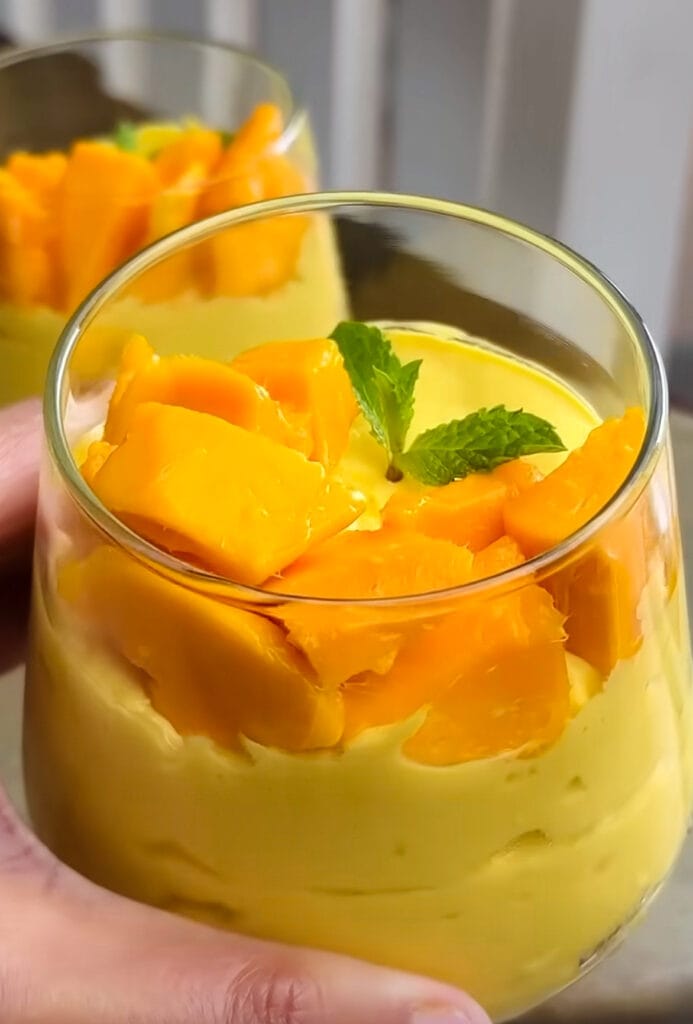
The main attraction of our show is, of course, the mango. The flavor and sweetness of mousse depends greatly on the type and ripeness of mangoes. For a sweet puree, less fibrous than others, I prefer Alphonso, Honey (Ataulfo), or Kent mangoes. Choose mangoes that are slightly soft when pressed and have a good aroma close to the stem. If they feel hard, they’re not ripe enough. If they are mushy, then they may be over ripe and may taste odd.
The first time I made a mango mousse, I used some pretty mangoes that I thought were a bit hard. I mixed them together and they were very nice in color, but were very devoid of flavor and a little bitter. That day I learned that the key to the best mango flavor was to wait a few days on the counter to ripen the fruit, if necessary. Don’t rush it!
Gelatin: Your Mousse’s Best Friend (and potential pitfall)
Gelatin is what gives your mousse its structure and keeps it from being just a creamy liquid. It’s a surprisingly simple ingredient, but there are a couple of things to remember:
“When working with gelatin, always sprinkle it over cold water first to ‘bloom’ it. This prevents clumping and helps it dissolve smoothly. Then, gently warm it until it’s clear, but never boil it, as excessive heat can reduce its setting power.”
Here’s why it matters: blooming allows the gelatin to absorb water evenly. If you add it directly to hot liquid, the outside of the granules can dissolve and form a barrier around the still-dry inside, leading to undissolved lumps. And boiling? That can weaken its gelling power, meaning your mousse might not set properly. So, take your time with the gelatin step; it’s short but critical.
Whipping Cream Without Overdoing It
Achieving perfect whipped cream is an art. We’re looking for soft peaks – a texture that’s light and airy, but still holds its shape when you lift the whisk. If you under-whip, your mousse will be too loose. If you over-whip, it can become grainy and heavy, like butter.
- Keep everything cold: Chill your mixing bowl and whisk in the freezer for 10-15 minutes before you start. Cold cream whips faster and holds its structure better.
- Watch for changes: Start on medium-high speed. You’ll see bubbles form, then the cream will thicken. Keep an eye on it. As soon as it holds soft peaks, stop! This usually takes 2-4 minutes with an electric mixer, depending on its power.
- Trust your eyes: The cream should look smooth and billowy. If it starts to look lumpy or separates, you’ve gone too far. Unfortunately, there’s no real way to fix over-whipped cream for mousse; it’s better to start fresh if you can.
Variations & Serving Suggestions
While this mango mousse is a delight on its own, it also lends itself to some wonderful tweaks.
- Lime zest: For an extra zing, fold in a teaspoon of finely grated lime zest with the mango puree. The aroma really pops.
- Coconut twist: For an even more tropical vibe, try replacing ¼ cup of the heavy cream with full-fat canned coconut cream. Just make sure it’s well-chilled, and only use the thick cream from the top of the can.
- Layer it up: You could layer the mousse with a thin biscuit crust (like crushed graham crackers) at the bottom of your serving glasses or alternate with fresh berries for a textural contrast.
- Garnish creatively: Besides mint and mango cubes, consider toasted coconut flakes, a sprinkle of passion fruit seeds, or a drizzle of raspberry coulis for a touch of color.
Storage & Make-Ahead Tips
One of the beauties of mousse is that it’s a wonderful make-ahead dessert. You can prepare the mousse up to 2 days in advance. Simply cover your serving dishes loosely with plastic wrap and keep them chilled in the refrigerator. Just be sure to keep it away from strong-smelling foods, as cream can absorb odors.
If you have leftovers (a rare occurrence, I’d say!), they’ll keep well for another day or two in the fridge. The texture might soften slightly, but the flavor will remain excellent. Freezing mousse isn’t typically recommended as it can alter the airy texture once thawed, making it grainy or watery.
Frequently Asked Questions
Can I use frozen mango for this mousse?
Yes, you certainly can use frozen mango! Just make sure to thaw it completely and drain any excess liquid before pureeing. You want the puree to be as concentrated in mango flavor as possible, so watery puree can dilute the taste and affect the mousse’s final texture.
How do I know when the cream is perfectly whipped?
You’ll know it’s perfect when it forms “soft peaks.” This means when you lift the whisk, the cream stands up but the tip gently curls over. If it’s too soft, it won’t hold the air needed for the mousse. If it’s too stiff, it’ll make your mousse dense.
Why did my mousse not set properly?
There are a few reasons your mousse might not set. The most frequent culprit is issues with the gelatin – either it wasn’t bloomed correctly, or it wasn’t fully dissolved, or it was overheated. Another common reason is overmixing the cream, which makes it lose its airiness and structural integrity. Finally, ensure you give it enough chilling time; at least 3-4 hours is a minimum, but overnight is always better.
Can I make this tropical mango mousse dairy-free?
You absolutely can! You’d replace the heavy cream with full-fat canned coconut cream (make sure it’s very cold, and only use the thick, solid cream from the top of the can, discarding the watery part). The flavor profile will lean more towards coconut, which is a lovely complement to mango.
How long does mango mousse last in the refrigerator?
Once prepared and set, your tropical mango mousse will stay delicious and hold its texture in the refrigerator for up to 3 days. Just keep it covered to prevent it from absorbing any other fridge smells.