


Well, if you’re anything like me when I first started buying furniture for my home, you probably thought a dining room was just a breakfast room with slightly fancier chairs. I mean, they both have tables and chairs, right? That’s what I thought! And oh man o man, was I ever wrong.
Honestly, the main thing that I liked about learning this distinction is how it completely changed the way I viewed home flow and entertaining. This isn’t just about décor; it’s about the purpose and feeling each room gives off. When you understand the core difference between dining room and breakfast room setups, it’s truly an eye opener. You stop designing two rooms that do the same job and start creating spaces that each fulfill a very specific need in your daily life.
Let’s be real, in today’s construction world, many builders skip the traditional formal space entirely, which just adds to the confusion. But even if you only have one area for eating, understanding the underlying rules of a formal versus a casual eating area can massively improve your design choices and make your space feel much more thoughtful.
Key Takeaways
- The biggest difference is the expected formality level of a breakfast room versus a dedicated dining room.
- Location and flow-through traffic dictate the room’s purpose—casual spaces are always near the kitchen.
- Furniture choices, like a china cabinet or a simple pedestal table, separate the two areas instantly.
- Decide if you truly need both spaces based on how often you host large, formal gatherings versus how you live day-to-day.
It’s All About the Vibe: Formality Level Explained
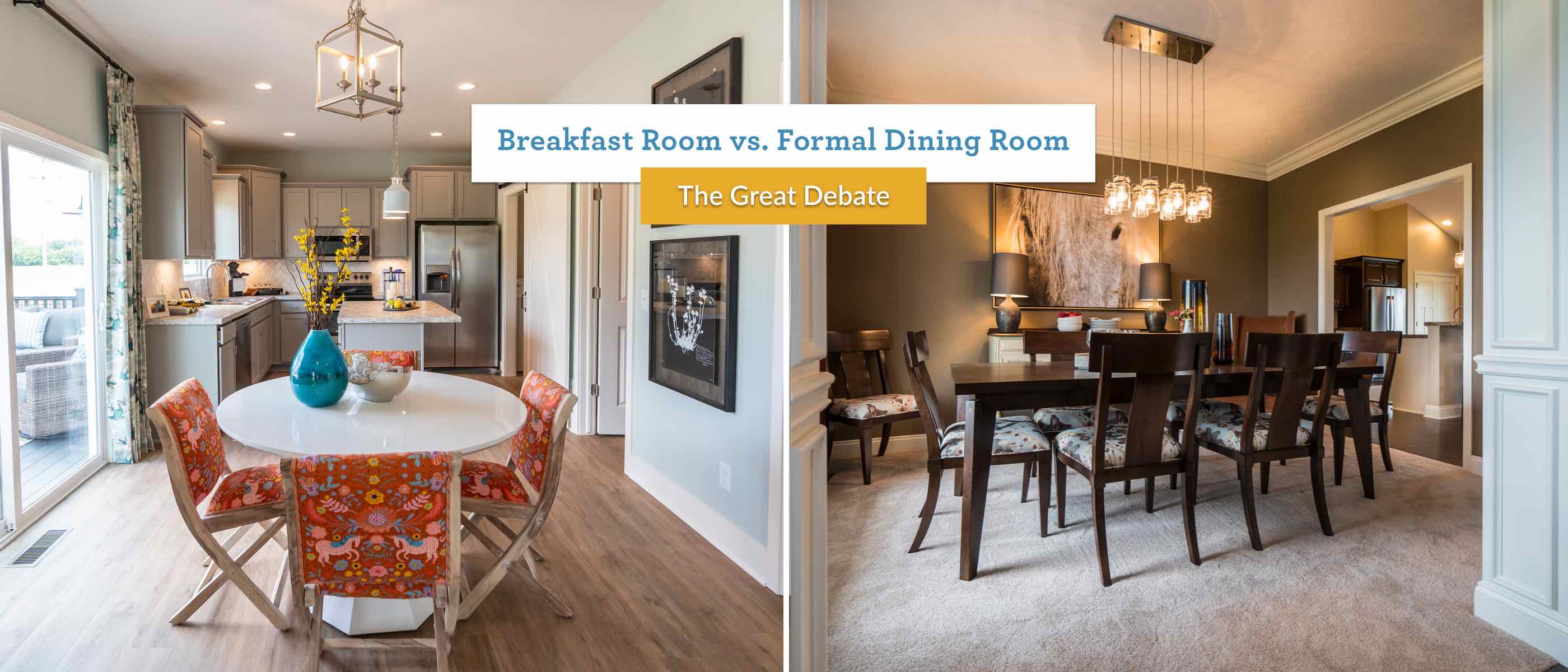
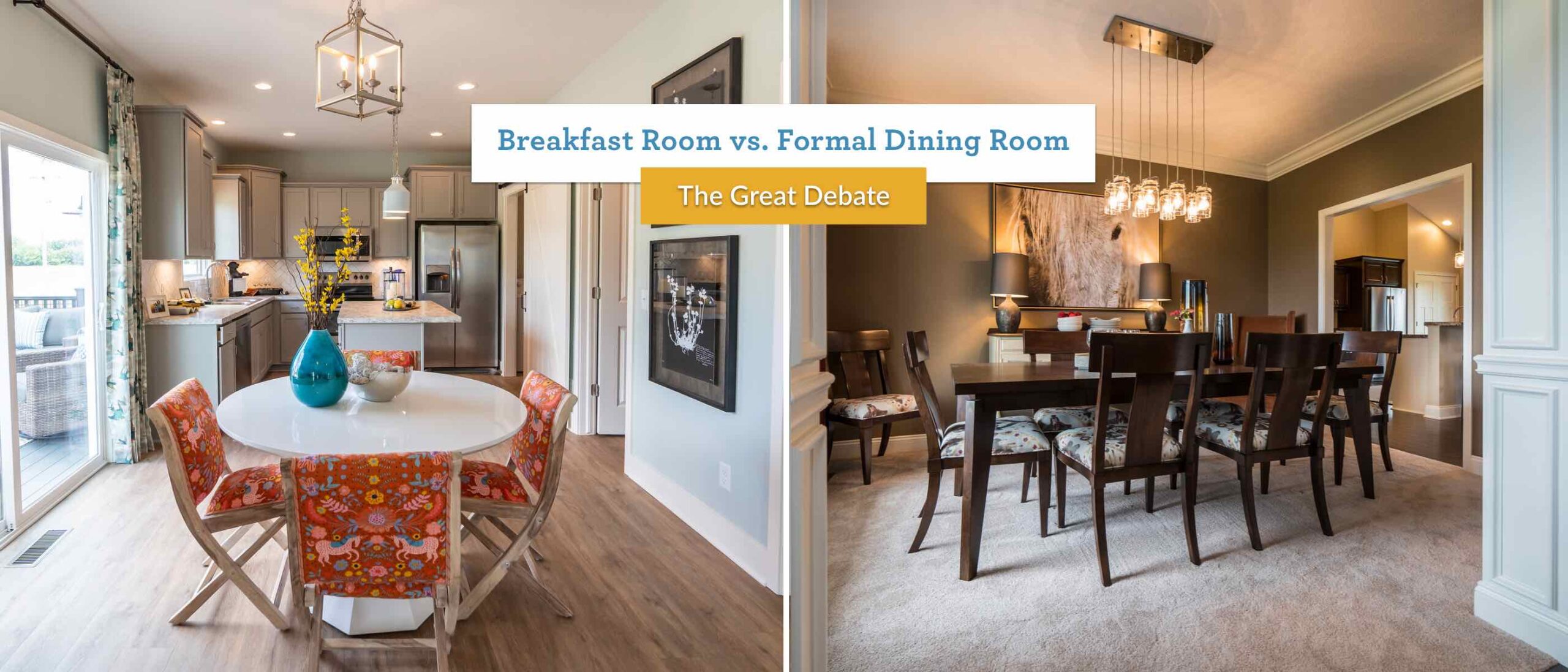
Think of the formal dining room as the tailored suit of your home. It’s serious, often separate from the main hustle and bustle, and it demands a certain silence and respect. The expected formality level of a breakfast room, on the other hand, is the comfy pair of sweatpants you throw on Sunday morning. It’s casual dining at its finest.
The vibe of the dining room tells you, “Slow down, stay a while, this is a multi-course commitment.” The breakfast room screams, “Grab your toast, finish your coffee, and tell me about your day.”
When you look at the architecture of older homes, this distinction is clear. Dining rooms were often tucked away at the front of the house, maybe with pocket doors, to contain the noise and provide privacy for serious conversations. Breakfast rooms? They were usually flooded with morning light, right next to the kitchen, making them the perfect location for a casual dining space in a home.
How Should a Dining Room Be Decorated Compared to a Breakfast Area?
The décor choices need to support the formality. For the dining room, you’re looking at heavy drapery, perhaps wainscoting or deep paint colors, and certainly more substantial art. Everything here feels permanent and important. You’re aiming for elegance.
When you’re deciding how to design a small breakfast room for maximum utility, you want light, bright, and cheerful elements. Think washable slipcovers, open shelving, maybe some fun wallpaper, and lots of natural materials. If a kid spilled grape juice on the floor of the breakfast room, you’d grab a sponge and laugh. If they spilled it on the formal dining room rug, you might cry a little bit. That’s the true test of formality right there.
Location, Location, Location: Flow-Through Traffic Matters
A proper breakfast room, or what many people call an eat-in kitchen or breakfast nook, has to be right next to, or even open directly into, the kitchen. This is because the whole point is speed and ease. When you’re scrambling eggs or just pouring cereal, you need that flow-through traffic to be minimal. You want to move from stove to table in two steps, max.
The formal dining room, conversely, is often separated. Sometimes it has its own hallway or is placed further away from the kitchen to give it that sense of occasion. You might even have a butler’s pantry acting as a buffer zone. It needs to be a destination, not a convenient pit stop.
The first time I tried to host a formal dinner party, I made the mistake of trying to treat my kitchen-adjacent casual dining area like a formal space. The whole evening was a mess! Every time someone had to get up for a drink or I had to bring out serving platters, we created a traffic jam right behind the guest of honor. We kept bumping chairs, and the sound of my husband scraping his chair back against the tile floor every time he needed more water drove me crazy. It was noisy, stressful, and totally lacked the quiet dignity required for formal service.
That’s when I realized: the casual eating area lives and dies by its proximity to the food prep. The formal room thrives on distance and separation.
Furnishings and Fixtures: Pedestal Table vs. Credenza

Understanding the Different Types of Seating
When we talk about the type of seating appropriate for a casual eating area, we are generally looking at something much less formal than the dining room’s heavy, often upholstered or carved chairs.
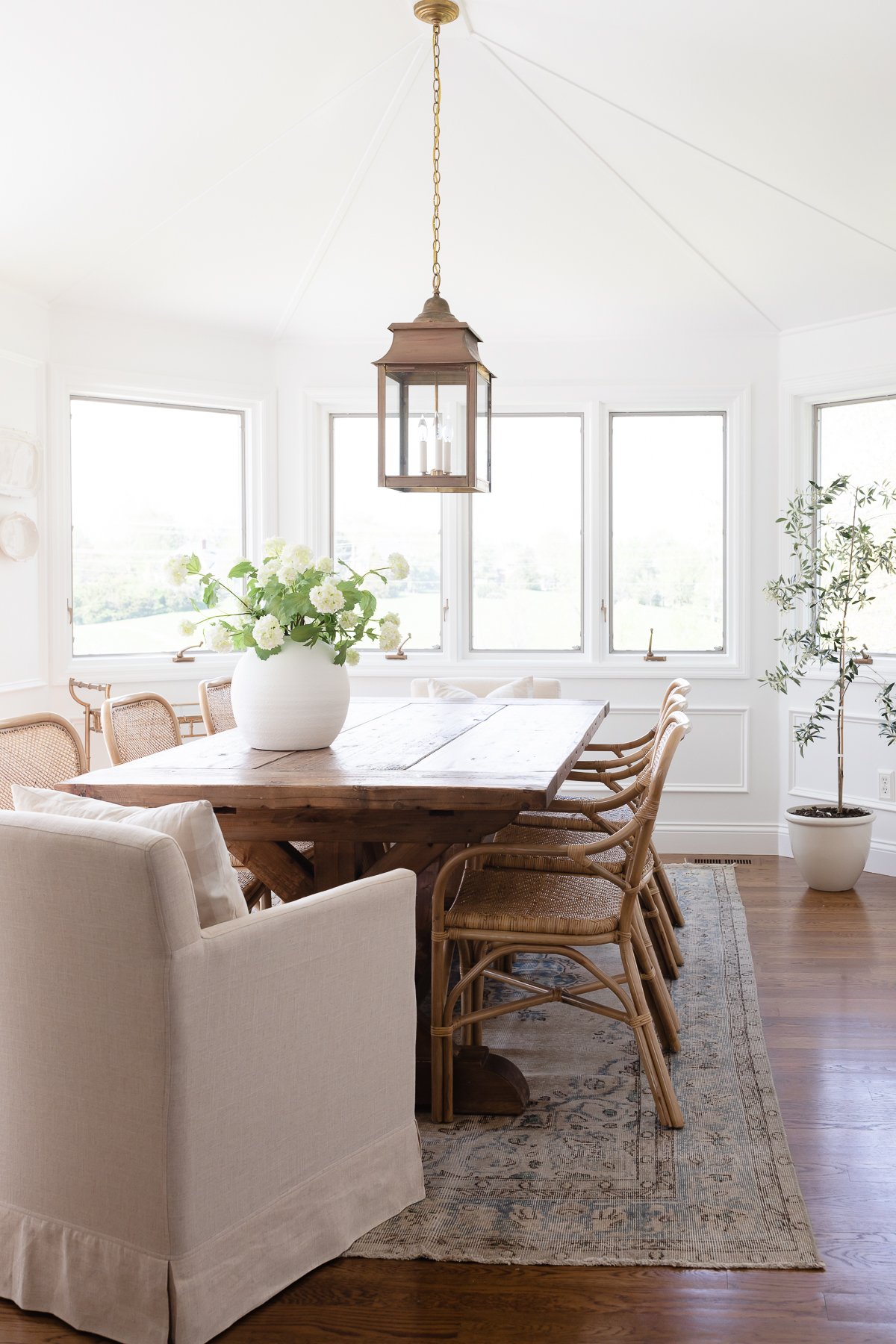
A breakfast room might feature cute, modern chairs, or often, the highly efficient banquette seating. A banquette is a built-in bench along a wall or corner, perfect for squeezing in more people and saving floor space. It invites snuggling and casual slouching—the antithesis of formal posture. The table itself is often a pedestal table, which has a single central base instead of four legs, making it easier to slide in and out of those built-in seats.
In the formal dining room, you expect serious seating. You might have eight or twelve matching chairs, often high-backed, sometimes with arms for the hosts, and usually upholstered in a fabric that screams “don’t spill on me.” The table is usually rectangular or oval, heavy wood, and designed to handle massive amounts of food and elaborate table linens.
Storage and Lighting Differences
Storage is another giveaway. If you see a massive piece of furniture used primarily for displaying fancy bowls, storing the “good” china, and keeping linens pristine, you’re probably in the formal space. This is where the stately china cabinet and perhaps a matching credenza live. These pieces are meant to look like heirloom furniture and often feature glass fronts for displaying the goods.
In the breakfast room, storage, if present, is usually simple built-in cabinetry or open shelving designed to hold everyday items: cereal boxes, juice glasses, maybe some brunch settings. It’s functional, not decorative.
Now, let’s talk about light. Formal dining areas demand drama, meaning spectacular chandelier lighting hanging perfectly centered over the table. This lighting is usually dimmable, designed to cast a flattering, warm glow over the guests and the food. Breakfast areas, since they are usually closer to the kitchen or windows, rely heavily on natural light. If they have artificial light, it’s often simple pendant lights or recessed lighting—bright and clear, perfect for reading the morning paper.
Let’s organize these differences into a simple comparison table, which I think is the clearest method for sorting out the features:
| Feature | Formal Dining Room | Breakfast Room / Nook |
|---|---|---|
| Primary Function | Special occasions, holidays, formal service. | Everyday meals, quick bites, coffee, casual dining. |
| Location & Traffic | Separated from kitchen, low flow-through traffic, often near the front of the house. | Directly adjacent to the kitchen, high daily traffic. |
| Table Type | Large, rectangular/oval, heavy wood (often requiring extension leaves). | Pedestal table, small round or square, often compact. |
| Seating Style | Matching, high-backed chairs, sometimes upholstered; designed for posture. | Banquette seating, simple wooden chairs, bar stools; designed for speed and coziness. |
| Storage Focus | China cabinet, credenza, displaying serving platters and formal dishware. | Simple built-in cabinetry, open shelving for everyday items. |
| Lighting | Chandelier lighting, sophisticated sconces, dramatic and dimmable. | Natural light prioritized, simple pendant lights, bright and clean. |
Functionality: Formal Service vs. Casual Dining
It’s about presenting a meal in a controlled, orderly manner. You are talking about formal service, often passed plates or plated services, requiring space for guests to sit without being disturbed by the cook running in and out. This space is intended for extended conversation, perhaps involving multiple courses, requiring guests to remain seated for a longer duration.
The breakfast room, conversely, is built for efficiency. It’s for quick morning routines, school lunches, or perhaps brunch settings on a lazy weekend. Because it’s so close to the kitchen, it often becomes the homework station, the paperwork center, or the place where the family sits down to sort mail. It’s highly versatile because its function is defined purely by convenience.
If you’re wondering what a formal dining room is used for besides holidays, here are some typical activities:
- Hosting business dinners or serious discussions where privacy is paramount.
- Showcasing antique furniture or family heirlooms—it’s a room for display.
- Formal birthday parties or anniversaries where specific table etiquette is followed.
- Buffet service: Sometimes, the dining room table is used purely as a grand serving station, especially for larger gatherings, even if the guests eat elsewhere.
- It’s the designated spot for wrapping gifts, particularly if they are large or require spreading out, since the room is generally protected from daily foot traffic.
We don’t live in the same way our grandparents did, though. Homes today are much less compartmentalized. Because of this architectural shift, many people feel a traditional, highly separate dining room is an unnecessary use of square footage, especially when space is a premium. But there is still something to be said for having a dedicated space that signifies, “This meal is special.”
Pro Tip: If your home only allows for one eating space, make it feel like a casual dining area that can be upgraded. Invest in a heavy, quality table, but surround it with comfortable seating, like banquette seating on one side. Save the formality for accessories—use a fancy table runner, linen napkins, and chandelier lighting only when you need to feel grand. This lets your single space function beautifully for brunch settings six days a week, but still give you the option for formal service when company arrives.
When Do You Actually Need Both?
Honestly, the answer depends entirely on your lifestyle and your socializing habits.
If you frequently host events that require dedicated space for 10 or more adults, and these events involve multiple courses or specific rules of etiquette—then yes, you really do benefit from a separate room. If you host Thanksgiving dinner and Christmas Eve parties every year, and your mother insists on setting out the china cabinet contents, you need that formal space. It’s about creating an experience that casual dining simply can’t reproduce.
However, if your entertaining involves pizza, takeout, football games, or just a few couples casually hanging out, you absolutely don’t need a dedicated, rarely used formal room. Most families who cook and entertain regularly will find that a large, well-designed eat-in kitchen with generous casual dining space serves 95% of their needs.
Many builders are trying to alleviate the problem by designing spaces that aren’t strictly one or the other—they are trying to blend the two functions. They might put the dining area adjacent to the main living space but furnish it with more substantial items, bridging the gap between ultra-casual and strictly formal. This approach can be a strategic way to make a smaller home feel bigger while still giving the homeowners options.
Considering Dimensions and Purpose
When thinking about what type of seating is appropriate for a casual eating area, you need to consider the dimensions for a standard breakfast room. Because this room is meant for convenience, it can be relatively small. A square room of 8×8 feet can comfortably fit a banquette and a small pedestal table for four people. You need enough space just for the meal and comfortable chairs.
A formal dining room needs significantly more real estate. You need room not only for the table and chairs, but also space behind the chairs for servers to move and pass food comfortably (often requiring 36 to 48 inches of clearance). This space might need to hold a china cabinet or a credenza, and accommodate a long table that seats eight to twelve. This is why a formal dining room often requires a space closer to 12×15 feet, or even larger.
If you have a large family, or if you regularly entertain, having both spaces is a tremendous advantage. It keeps your daily clutter contained to the casual area and preserves the beauty and dignity of the formal room. It also separates smells! There’s nothing worse than serving a delicate dessert in a room that smells heavily of the stir-fry you made for lunch.
Making the Décor Work for You

In the formal dining room, you might use heavier textures—velvets, silks, dark polished woods. The colors tend to be rich and deep—think navy blue, emerald green, or deep burgundies. They create an environment that feels serious and warm, designed to look stunning by the light of that chandelier lighting.
For the casual dining area, you want materials that are forgiving. We’re talking about wipeable surfaces, natural fibers like linen or cotton, and often, lighter, airier colors. White, pale blue, or soft yellow walls can really make the morning sun feel bright and energetic. This is also where you can safely experiment with fun, patterned tile or exposed brick, since the atmosphere is meant to be relaxed and welcoming. If you’re building a new space, maximizing the window area is key to making the breakfast room feel open. It is the best location for a casual dining space in a home because it pulls in that delicious morning energy.
If you’re looking for more architectural distinctions and design standards, you might find some useful details by looking at traditional home design practices through organizations dedicated to historic preservation or interior architecture. For example, understanding how historic homes separated ‘public’ and ‘private’ spaces really helps articulate the traditional purpose of the dining room.
Frequently Asked Questions
What is the difference between an eat-in kitchen and a dedicated breakfast room?
While often used interchangeably for casual dining, an eat-in kitchen means the table is physically inside the main kitchen workspace (often near an island or directly against a wall of counters). A dedicated breakfast room is a separate, smaller room adjacent to the kitchen, specifically designed just for eating, but it’s still far less formal than a true dining room.
What type of seating is appropriate for a casual eating area?
The most appropriate seating for a casual eating area usually includes banquette seating (built-in benches), lightweight chairs that are easy to move, or sometimes even kitchen stools if the “nook” is high. Comfort and ease of cleaning are generally prioritized over formal appearance or strict posture.
Do I need a china cabinet or credenza in my breakfast room?
No, definitely not. A china cabinet is meant to store formal serving platters, specific dinnerware, and table linens used for formal service. This large piece of furniture would look completely out of place and unnecessary in a breakfast room, which should only house day-to-day items in simple built-in cabinetry.
How much does the expected formality level of a breakfast room differ from a dining room?
The formality level is vastly different. The breakfast room requires zero formality; casual clothes, reading the paper, and quick meals are standard. The dining room, on the other hand, is built for formal service, requires appropriate dress code for guests, and demands a slower, more mannered approach to dining. It’s the difference between a quick meeting and a state dinner.
What are the typical dimensions for a standard breakfast room versus a dining room?
A standard breakfast room or nook can typically range from 8×8 feet to 10×10 feet, designed for four to six people easily. A formal dining room generally starts around 12×14 feet and scales up from there, often designed to comfortably seat eight to twelve people while still leaving plenty of circulation space for service staff or hosts moving serving platters.
So, now that you know the rules, which room does your house actually need? If you found this useful, maybe it’s time to take a critical look at your current setup and figure out if you’re unintentionally using your formal china cabinet room for your daily toast. What small change could you make today to honor the intended purpose of your eating spaces?


Leave a Reply