

I know the feeling. You’ve got these enormous, lush hydrangea bushes—the envy of the neighborhood—but you’re terrified to touch them. You worry that one wrong snip means a whole year without those gorgeous, colorful blooms. It’s a completely fair fear, mostly because knowing how do you prune a hydrangea plant depends entirely on one single, confusing factor: Does it bloom on old wood or new wood?
Look, pruning hydrangeas isn’t some secret handshake only master gardeners know. It’s actually quite straightforward once you identify the type you’re working with. You just need to know the rules, grab your bypass pruners, and commit.
My goal here is simple: to give you the confidence to approach your bushes without fear. We’re going to break down the specific needs of each common type, so you can encourage bushiness, control their size, and ensure you get that spectacular show every summer.
Key Takeaways
- Start by determining if your hydrangea blooms on “old wood” or “new wood”—this is the make-or-break difference for pruning success.
- Prune old wood bloomers (like Mopheads and Oakleafs) immediately after the spent blooms fade in summer, and never after August.
- New wood bloomers (like Paniculatas and Smooth hydrangeas) are cut back hard in the dormant season—late winter or early spring.
- Overgrown, leggy hydrangeas can be brought back to life using the ‘one-third’ technique over several years.
The Golden Rule: Old Wood vs. New Wood

Image credit: herebydesign.net
Before you even think about picking up those loppers, you have to answer this question: When did your hydrangea set the buds that will become next year’s flowers? This determines your timing, and timing is everything in the world of hydrangeas.
Old Wood Bloomers produce their buds on stems that grew the previous summer. If you cut these stems back in the fall or spring, you are literally cutting off next summer’s flowers. These types generally include:
- Hydrangea macrophylla (Bigleaf Hydrangeas, including Mopheads and Lacecaps)
- Hydrangea quercifolia (Oakleaf Hydrangeas)
- Hydrangea serrata (Mountain Hydrangeas)
New Wood Bloomers produce their buds on new growth that appears in the current growing season. Since the flower buds won’t exist until spring, you can cut these back safely in the late winter or very early spring without losing blooms. These are typically the easier ones to manage.
- Hydrangea paniculata (Panicle Hydrangeas, like ‘Limelight’ or ‘Quick Fire’)
- Hydrangea arborescens (Smooth Hydrangeas, like ‘Annabelle’)
- Newer reblooming varieties like ‘Endless Summer’ (these are a bit different, as they bloom on both old and new wood, giving you more wiggle room).
If you inherited a hydrangea and you have absolutely no idea what kind it is, you’ll want to play it safe and prune lightly—or better yet, just wait until it flowers and then apply the rules below.
How to Prune Hydrangeas That Bloom on Old Wood

Image credit: tedsgardens.com
This group requires the most careful touch, especially the classic Mopheads (Hydrangea macrophylla). The rule here is strict: Prune only right after the spent blooms have faded, usually in mid-summer (July or August). You need to finish the job before they start setting those new, delicate buds for the following year.
I’ll never forget the year I decided my Mopheads looked a little scraggly in October, so I trimmed them back severely, thinking I was doing them a favor before winter. That following spring, I watched all my neighbors enjoy their beautiful blue globes while my bushes stood there, green and lush, but utterly flowerless. It was a painful, bloom-free lesson in the tyranny of old wood.
Never prune old wood bloomers after late summer.
The Techniques for Old Wood
When you cut back Hydrangea macrophylla, your cuts should be targeted, not general:
- Deadwood Removal: First, go in and remove any deadwood or damaged canes (stems). These look gray, brittle, and have no sign of life. Cut these all the way down to the base.
- Selective Thinning: If the bush is dense or leggy, select a few of the oldest, thickest canes—maybe a quarter of them—and cut those down to the ground. This opens up the center for better air circulation and encourages strong, younger growth.
- Shaping & Sizing: You can cut stems back to improve the shape, but always cut just above a healthy leaf node—ideally a three-leaf node. This minimizes the risk of cutting off a hidden bud further down the stem. You should only be removing the top 6-12 inches of growth if you’re concerned about overall size.
- Deadheading: Remove the faded hydrangea flowers (which is called deadheading). Cut the stem just above the first set of healthy leaves beneath the flower head. This keeps the plant looking tidy.
Look, I’ll be the first to admit—this is the part I still struggle with sometimes. I often feel rushed in July and wait too long, which means I might miss the optimal window. Just remember: it’s better to prune too little or too early in summer than too late in fall. If you have to choose, err on the side of caution.
Pruning Techniques for New Wood Bloomers
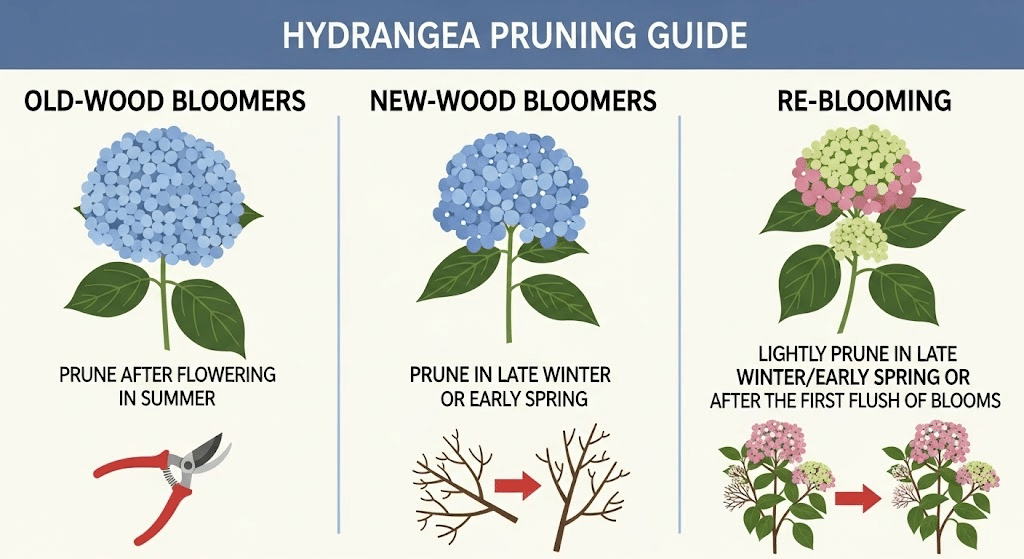
Image credit: dhgardencentre.com
If you have Hydrangea paniculata (like the incredibly popular ‘Pee Gee’ or ‘Limelight’), you can breathe a sigh of relief. This is where pruning is much less stressful and a lot more forgiving. Since they flower on the current year’s growth, you can be quite aggressive during their dormant season.
When to Cut Back New Wood Hydrangeas
The best time is late winter or early spring, just before new buds begin to swell. The weather is still cool, and you can clearly see the structure of the bush without all the leaves getting in the way. You don’t need to worry about the timing of pruning in relation to faded hydrangea flowers, because they’ll be long gone by winter.
The goal of pruning these types is to build a sturdy structure capable of holding up the sometimes enormous flower heads (especially true for ‘Annabelle’ and the larger Paniculatas). If you don’t cut them back, the stems get weak and floppy.
You can generally cut these shrubs back by one-third to one-half their total height. For a smooth hydrangea, you can even cut them almost down to the ground—sometimes leaving only a foot or two of established canes—and they will bounce right back, producing spectacular blooms that summer.
The difference in approach is huge.
Rejuvenation Pruning: Bringing Back Overgrown Bushes

Image credit: snowdropfarm.com
What do you do when you move into a new house and find a monster of a hydrangea that hasn’t been touched in a decade? It’s leggy, woody, and only flowers on the very tips. The answer is rejuvenation pruning, which requires patience but yields incredible results.
You can’t just chop it all off at once, especially if it’s an old wood bloomer—that’s a shock that can kill the plant or, at the very least, guarantee no blooms for a couple of years. The trick is to do the severe cuts slowly, spreading the work out over three years.
Here’s the step-by-step for bringing back that massive, overgrown mophead hydrangea:
- Year 1 (Summer): Select the oldest, thickest, and woodiest one-third of the canes and cut them down to the ground. Leave the rest of the bush completely alone, allowing it to produce blooms and new buds as normal.
- Year 2 (Summer): Select the next oldest one-third of the canes and cut those down to the ground. The new growth from Year 1 should now be filling in nicely.
- Year 3 (Summer): Cut down the final one-third of the original, old canes.
By the fourth year, you should have a completely renewed, healthy, and much smaller bush, full of youthful growth and excellent flower production. This gradual process minimizes the stress and maintains some level of blooming each year.
Essential Tools and Deadheading Spent Blooms
:strip_icc()/BHG-How-to-Deadhead-Hydrangea-1840749191-f3a5fd2d163947ba88f24d3207483603.jpg)
Image credit: www.bhg.com
Having the right tools makes all the difference. Trying to trim thick, woody stems with kitchen scissors is going to result in damaged stems and a tired gardener. You need clean, sharp cuts.
For most pruning, you’ll use high-quality bypass pruners. These work like scissors, giving a clean cut that heals quickly. Avoid the anvil-style pruners, which crush the stem.
For those super thick, old canes that require rejuvenation pruning, you’ll want a set of loppers. These have long handles that give you the leverage needed to slice through wood that’s thicker than your thumb. Always make sure your tools are clean—a quick wipe down with rubbing alcohol between plants helps prevent the spread of diseases.
Pro Tip: The Deadhead vs. Pruning Distinction
Deadheading (removing spent blooms) is purely aesthetic and can be done any time up until the buds are set. Structural pruning (reducing height or removing old wood) changes the shape and size of the plant, and this must adhere strictly to the “old wood” or “new wood” timing rules. Don’t mistake deadheading for a major cutback.
Many gardeners choose not to deadhead hydrangeas in the fall, especially Mopheads, and there’s a good reason for this. Those dried, papery flower heads actually offer some protection for the delicate buds set just below them, helping them survive harsh winter weather. Leaving them also gives the garden texture and visual interest when everything else is bare. It’s truly beautiful when the morning frost coats them, turning them into pale, frosted sculptures you can almost feel.
A Pruning Schedule at a Glance
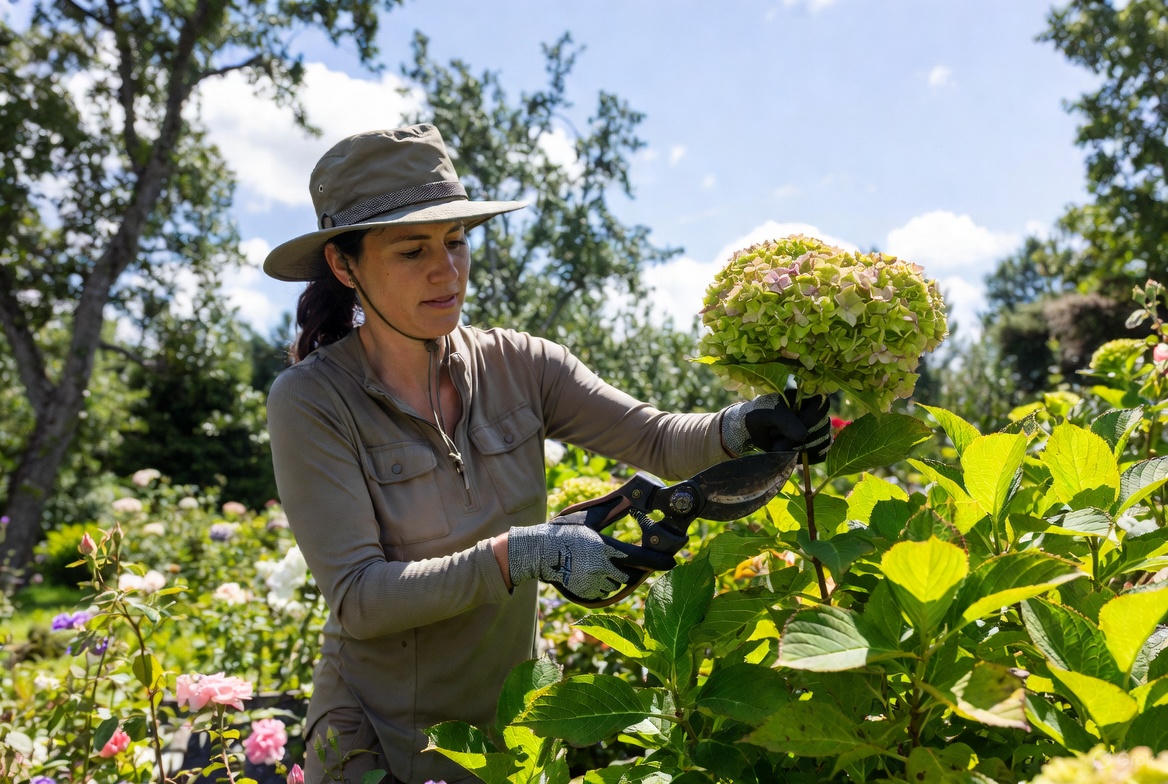
Image credit: www.iscapeit.com
To help you keep track of which hydrangea demands what and when, here is a quick guide. Remember, these timings are general; adjust slightly based on your climate zone (late winter means February/March in many places, and summer means July/August).
| Hydrangea Type (Species) | Blooms On | When to Prune | How Much to Remove |
|---|---|---|---|
| Bigleaf (Macrophylla) & Oakleaf (Quercifolia) | Old Wood | Mid-Summer (Immediately after flowering) | Remove only spent blooms, deadwood, and selectively thin up to 1/4 of the oldest canes. |
| Smooth (‘Annabelle’ / Arborescens) | New Wood | Late Winter / Early Spring | Cut back hard—often down to 1-2 feet above the ground. |
| Panicle (‘Limelight’ / Paniculata) | New Wood | Late Winter / Early Spring | Cut back by 1/3 to 1/2 of overall size to build a sturdier structure. |
| Rebloomers (‘Endless Summer’) | Both Old & New Wood | Prune lightly after the first flush of blooms or in late winter/early spring if needed. | Remove only dead wood and thin lightly. They often don’t need much structural pruning. |
The most important part of successful gardening is simply observing your plants. If you cut a certain branch and get great blooms next year, keep doing it. If you cut a certain branch and lose all your blooms, well, you know not to do that again!
It’s also important to understand the botanical structure of the plants you’re growing. For more detailed information on species classification and growth habits, you might want to consult a reputable horticultural resource. The botanical characteristics of Hydrangea species Understanding the difference between a Bigleaf and a Panicle means the difference between a glorious show and a year of frustration. Pruning guidelines from university extension offices
Ultimately, when deciding how do you prune a hydrangea plant, remember the wood, choose the time, and use the right tools. You’ve got this.
Frequently Asked Questions

Image credit: littlelimepunchhydrangea.com
When is the best time of year do I prune hydrangeas?
The ideal time depends completely on the species. For “old wood” bloomers (Mopheads, Oakleafs), prune in mid-summer, immediately after flowering. For “new wood” bloomers (Panicle, Smooth), prune during the dormant season—late winter or very early spring.
Can I prune hydrangeas down to the ground?
You can prune New Wood bloomers, like Smooth Hydrangeas (Annabelle), down to the ground in late winter, and they will rebound beautifully. However, you should never cut Old Wood bloomers (Mopheads) down to the ground, as this will result in zero flowers the following year and can severely damage the established plant structure.
Why are my hydrangeas not blooming after I pruned them?
The most common reason for a lack of blooms (often called “blind wood”) is pruning an old wood bloomer too late in the season (fall or spring). If you pruned a Mophead in October, you removed all the buds that had been set for next summer. You must wait for the buds to set before you prune this type.
Does cutting back hydrangeas help them grow bigger blooms?
Yes, for New Wood bloomers like the Panicle varieties, cutting them back in the dormant season concentrates the plant’s energy into fewer, stronger stems, often resulting in larger and sturdier flower heads that are less likely to flop over in rain or wind.
What’s the one hydrangea type you find the most confusing to prune, and why?


Leave a Reply