


I swear, sometimes it feels like the dining room is the last place we decorate. We spend all this time making the living room look amazing and the kitchen feel cozy, and then the dining area just gets… forgotten. It’s supposed to be where we gather, laugh, and share good food, right?
But when your windows are bare or covered by some sad, outdated blinds, the whole room feels cold. Like, really cold. I think the key piece people miss is the curtains. They aren’t just something you hang up to block the sun; they are the literal frame for one of the most important rooms in your home.
Look, I get it. Picking out window coverings can be stressful. Should dining room curtains touch the floor? Do you need heavy velvet drapery or just simple linen blend fabrics? The funny thing is, the choices are overwhelming, but the basic rules are super simple once you know them.
My goal here is to walk you through exactly how to pick, hang, and style your dining room curtains so your space goes from zero to a hundred. We’re talking warmth, sophistication, and that little touch of class you’ve been missing.
Key Takeaways
Hanging Them High: Should Dining Room Curtains Touch the Floor?
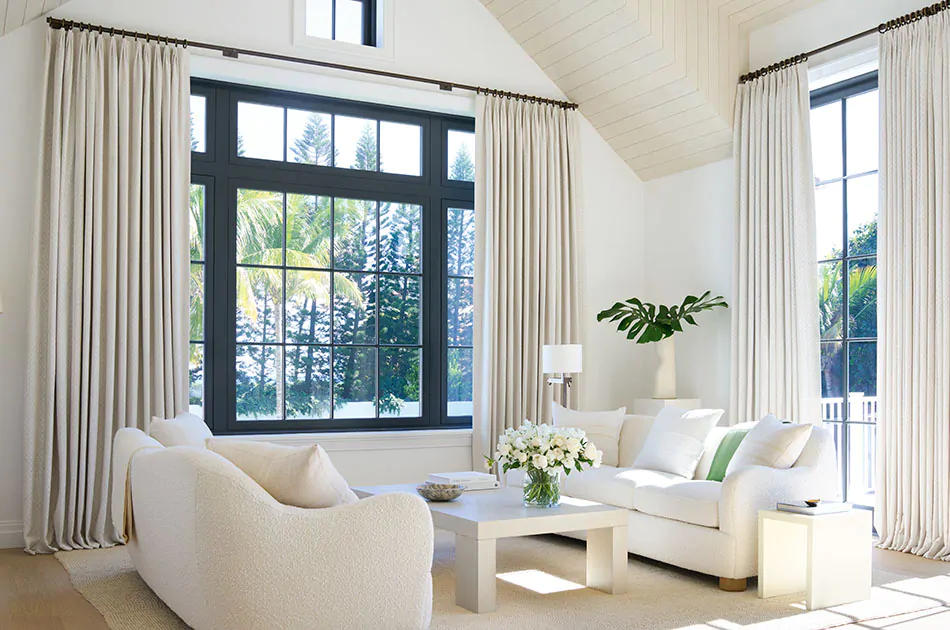
Let’s be real: size matters when it comes to curtains. This is where 99% of people trip up, and it totally ruins the final appearance. If you walk into a room and the curtains look stubby, or if they just skim the top of the window frame, I guarantee you’re missing out on serious visual space.
The first thing you need to know is how high should I hang dining room curtain rods? You need to install the rod significantly wider and higher than the window itself. If you’re using ready-made panels, try to hang the rod 4 to 12 inches above the window frame. If your ceilings are really tall, go even higher—almost halfway between the top of the window and the crown molding. This simple trick visually pushes your ceiling up and makes the room feel airy and much bigger.
Now, about the length question: Should dining room curtains touch the floor? Yes! Absolutely yes. There are three main options, but only one is truly elegant for a dining space:
- The Float: Ends exactly at the floor. This is clean and practical, especially if you open and close them constantly.
- The Break (The Kiss): Just barely touches the floor, creating a tiny, subtle bend. This is the look I prefer for a polished, modern dining room. It’s crisp but relaxed.
- The Puddle: Excess fabric (6+ inches) pools dramatically on the floor. This screams luxury and works best with heavy velvet drapery in formal dining rooms, but honestly, it’s a bit of a dust magnet. For a high-traffic area, I’d skip the puddle.
If you choose to have the curtains just kiss the floor, that slight weight and drape will make the whole room feel grounded. Plus, it just looks more custom than having panels that stop awkwardly a few inches too high.
Finding Your Vibe: Comparing Curtain Styles for Your Space
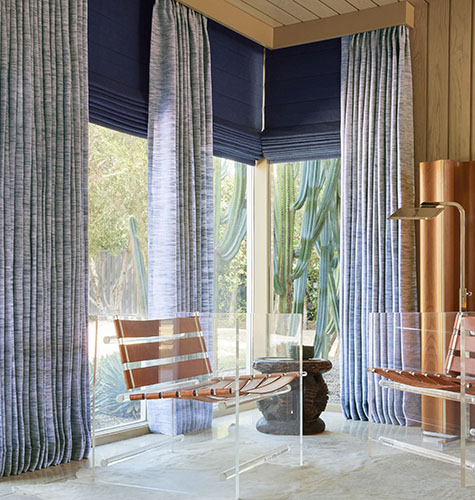
Once you nail the height and width, you get to the fun part: picking the style. The type of top treatment you choose dictates the level of formality and the overall feeling of the room. Do you want something traditional and tailored, or something quick and modern?
If you’re looking for formal dining room curtain ideas, you almost certainly want Pinch pleat drapes. These are those beautifully tailored drapes where the fabric is gathered and stitched tightly at the top, creating permanent folds. They use specialized hardware, often traverse rod systems, which makes them slide really easily, even when they’re heavy. They have a history of making a space look expensive. Seriously, if you want your room to look like it cost five times what it actually did, go with a beautiful set of pinch pleats.
For a contemporary or simple approach, grommet top curtains are fantastic. They have metal rings built right into the top of the fabric. The curtain rod slides directly through these rings. They create deep, soft folds and are incredibly easy to open and close. They offer a neat, structured look without feeling stuffy, which is great if you want a modern dining room curtain trend for 2024.
Pro Tip: For a polished look, make sure the curtain width is 2 to 2.5 times the width of the window opening. This ensures the curtains look full, even when closed, and don’t look skimpy or strained when they are pulled back with tiebacks and holdbacks.
And then there are Roman shades. These aren’t technically drapes, but they’re still window treatments. Roman shades pull up into neat, horizontal folds. They are super popular for smaller windows or when you have a piece of furniture (like a hutch) right against the wall beneath the window. They deliver a clean, tailored finish, especially when paired with a simple valance.
The Fabric Question: Sheer Panels vs. Velvet Drapery

This decision is all about balancing the light you want with the privacy you need. You have to think about what the room is actually used for. If you eat dinner in there at 7 PM, do you want your neighbors watching you wrestle with a chicken breast? Probably not.
If your dining room is already brightly lit during the day and you want to maintain that brightness while just softening the view, sheer panels are your best friend. They diffuse the light, making it feel softer and prettier—like liquid sunshine washing over your farmhouse dining table. They offer very little in the way of night privacy, however, so they are typically layered with a second, heavier layer.
I absolutely adore linen blend fabrics. They are slightly thicker than pure sheer, offering some texture and a beautiful drape. You can literally feel the cool, crisp quality of the linen in your hands when you adjust them. Linen works especially well if you’re going for a coastal or modern farmhouse vibe. They allow for great light filtering in dining areas without giving up all your privacy.
On the flip side, if you want drama, warmth, and sound absorption, you want velvet drapery. Velvet just drinks in the light and gives the room a deep, luxurious feel. It’s thick, heavy, and definitely leans toward the formal side. It also helps with thermal efficiency—bonus! If your dining room gets chilly in the winter, velvet drapery or panels with thermal efficiency built in can help keep things snug.
My Biggest Mistake When Picking Window Treatments (The Anecdote)

The first time I tried to tackle the dining room window, I was totally focused on aesthetics. I saw these gorgeous silk panels in a store—they were a rich emerald green—and I just bought them impulsively. I didn’t measure the window width properly, and I completely forgot about function.
I hung them up, they looked fine during the day, but that first night we had people over for dinner? Oh man o man!!! As soon as the sun went down and the lights came on inside, those silk panels were practically transparent! The fabric was too thin and everyone outside could see everything we were doing.
I thought this was a waste just like other things i buy as an impulsive buyer. I had to rip them down the next day and start over. That experience taught me that in a dining room, layering is king, especially if you have ground floor dining rooms where privacy is key. I ended up getting a strategic double curtain rod system.
I layered the pretty, emerald sheer panels on the inside rod, and then I added actual blackout liners (or heavy, solid cotton drapes) on the outside rod. That way, during the day, we got the soft green glow from the silk. But at night, we could draw the blackout liners closed and have total privacy. It proved me wrong that I couldn’t make them work, and I’m so happy about it that it made me like this!
Hardware Hacks: Rods, Finials, and Traverse Systems

The rod and the decorative bits (the finials and end caps) are like the jewelry for your curtains. You can have amazing drapes, but if they’re hanging from a flimsy rod, the whole thing looks cheap. If you don’t pay attention to the hardware, you’re missing a big part of the finished look.
If you’re layering two different fabrics—like I mentioned above with the sheer panels and the blackout liners—you absolutely need a double curtain rod. This allows the two sets of curtains to operate independently, which is a lifesaver for light control and privacy. The front rod usually projects further out from the wall to handle the heavier drape, while the back rod holds the sheer layer.
When selecting your rod material, think about the metal finishes already in the room. Are your light fixtures brass? Use brass finials and end caps. Is your table modern with brushed nickel accents? Stick to brushed nickel or matte black. Consistency here makes the difference between “I bought this ready-made” and “An interior designer did this.”
For very wide dining room windows, a traverse rod system is often better than a standard decorative rod. Traverse rods use internal carriers and cords (or motors, these days) to move the drapes smoothly without you having to touch the fabric. If you have those truly massive, panoramic windows, a smooth traverse rod system handles the weight and volume of the fabric easily, which is a major bonus.
Color Theory: What Curtains Make a Dining Room Look Bigger?
,quality(85)/f/54992/2169x2880/15ab0aeec1/stoneside-custom-drapery-roman-shades-sitting-room.png)
Color is powerful, and in the dining room, the wrong curtain color can make the room feel heavy and suffocating. The development of modern interior design has shown us that certain color pairings manipulate space better than others.
If your dining area is small, the first rule is simple: blend, don’t contrast. How to choose curtains to match dining room wall color? Choose curtains that are either the exact same shade as the wall or just two shades lighter or darker. When the curtains essentially disappear into the wall, your eye travels continuously across the room, which is exactly what makes a dining room look bigger. A pale grey wall with light linen blend fabrics in off-white or light heather gray works wonders here.
If you have a large, formal dining room, you have much more freedom. This is where rich colors like deep jewel tones or saturated velvet drapery can truly shine. Imagine a navy blue or burgundy velvet set against a cream wall. That deep contrast adds depth and drama, making the room feel enclosed and intimate, perfect for formal dinners.
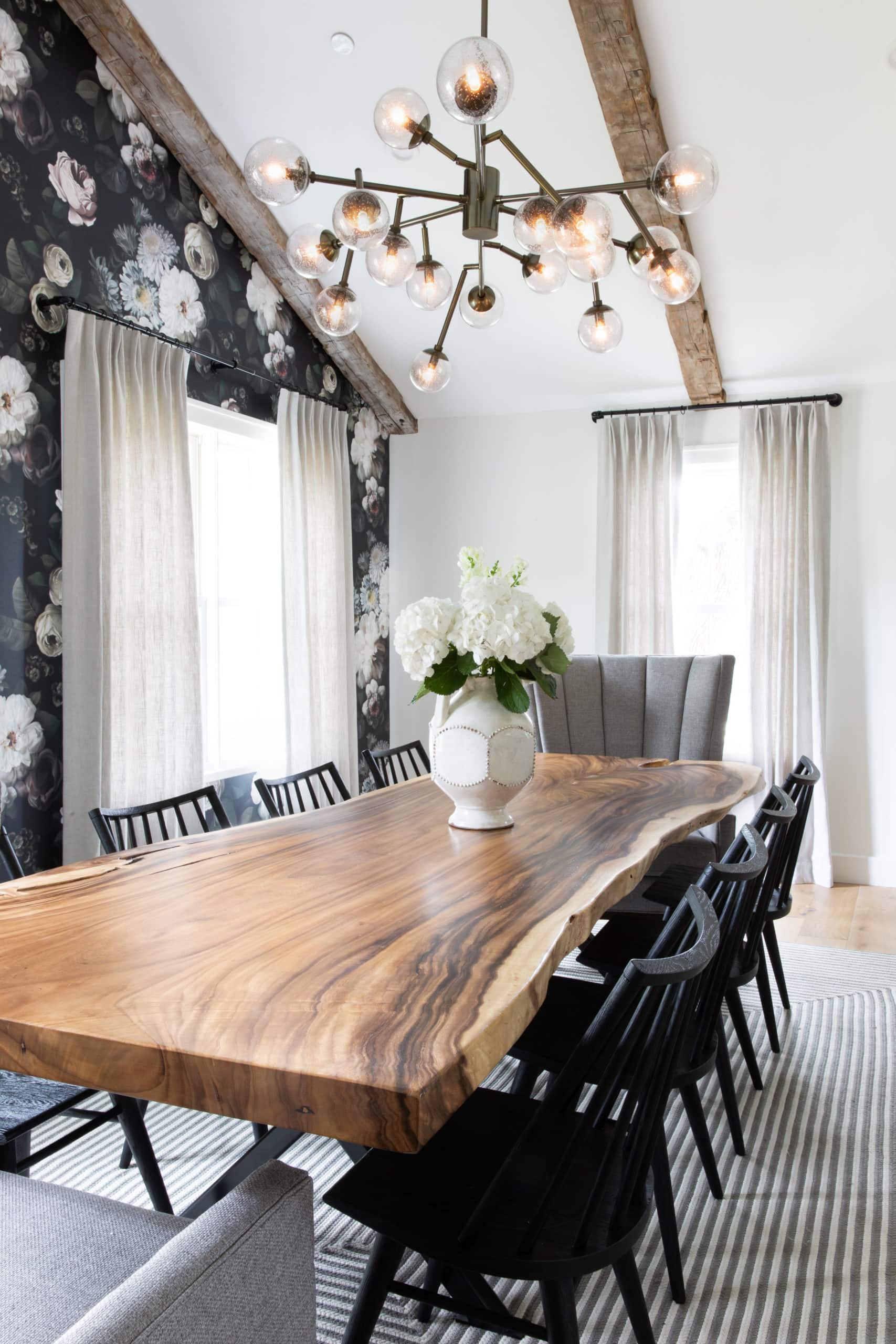
If you have a bold wallpaper or brightly patterned rug, keep your curtains absolutely neutral. Let the rug be the star. The curtains should frame the view, not compete with the art on the walls or the pattern on the floor. If you want a hint of pattern, look for subtle vertical stripes or tone-on-tone textures rather than big, aggressive prints. For some additional reading on integrating color, I often refer to this resource on how color affects perception: Wikipedia on Color Psychology.
Specialty Solutions: Dealing with Tricky Windows
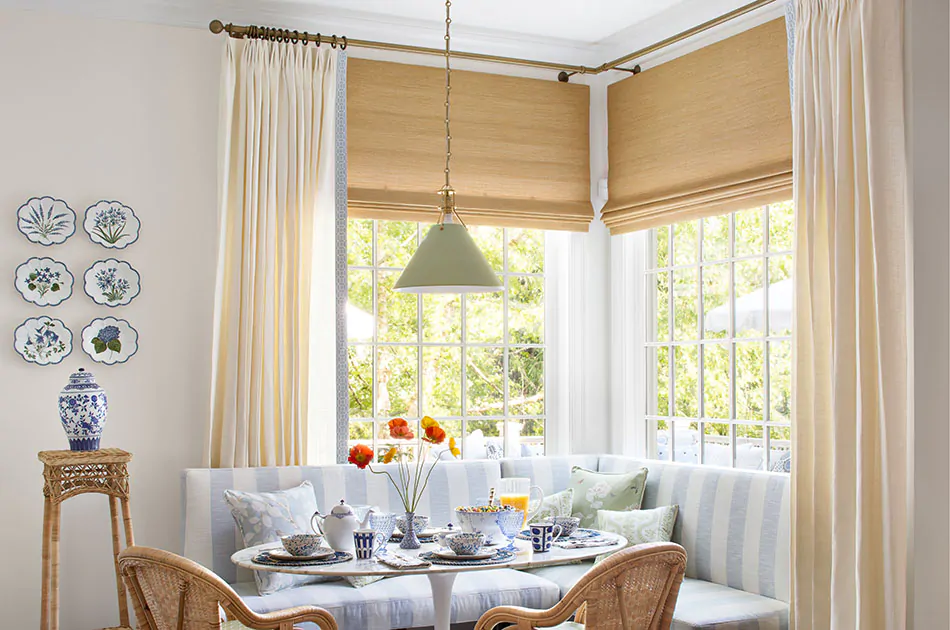
Not all dining rooms have easy, rectangular windows. Sometimes you have a bay window, a very small window, or one that’s oddly positioned over a buffet or radiator. Don’t worry, there’s a treatment for that.
Cafe curtains are excellent budget-friendly dining room window treatments, particularly for kitchens and small dining nooks. They only cover the lower half of the window, offering privacy at eye level while leaving the top half completely open to allow maximum light flow. They work best in casual settings, complementing a farmhouse dining table beautifully.
If you have small dining windows, you might be considering a valance vs drapes. A valance is just a decorative fabric header that covers the top of the window and conceals the hardware. They look nice, but they don’t give you any privacy or light control. If you don’t need privacy, using a tailored valance or a decorative cornice board gives the window a finished look without overwhelming a tiny space with fabric.
For those times when drapes just aren’t feasible—maybe you have built-in seating right up against the window—woven wood blinds or Roman shades are a brilliant alternative. They add texture, pull up out of the way, and don’t require any floor space. If you want to use them just for light filtering in dining areas, try woven wood blinds without a privacy liner; you’ll get stunning filtered light.
Easy Maintenance: Picking Clean and Durable Materials

Since the dining room is where food and drinks live, you have to be practical. Easy to clean curtain materials for dining rooms are often synthetic blends or cotton/linen mixes that can handle a bit of spot cleaning or, heaven forbid, a full wash without shrinking into nothing.
I prefer materials that don’t absorb odors easily and aren’t prone to wrinkling. Polyester blends and durable cotton sateen are incredibly forgiving. They’re usually less expensive than pure silk or delicate wool, making them budget-friendly dining room window treatments that still look great.
If you opt for truly expensive, tailored items like velvet drapery or intricate Pinch pleat drapes, you need to commit to regular, gentle vacuuming to remove dust. If you stain them, they will likely require professional cleaning. That’s just the cost of that high-end look.
Here is a quick breakdown of common dining room fabric choices and their characteristics:
| Fabric Type | Formality Level | Light Filtering/Privacy | Best Cleaning Method |
|---|---|---|---|
| Sheer Panels (Polyester) | Low/Casual | High light, Low privacy | Machine Wash Gentle/Cold |
| Linen Blend Fabrics | Mid-High | Good light filtering, Moderate privacy | Dry Clean or Spot Clean |
| Velvet Drapery | High/Formal | Low light, Excellent privacy | Professional Dry Clean Only |
| Grommet Top Cotton | Casual/Modern | Moderate light and privacy | Machine Wash Cold |
| Woven Wood Blinds | Casual/Natural | Filtered light, Moderate privacy | Dusting/Wiping |
Layering Techniques: The Double Rod Magic

I mentioned the double curtain rod earlier, and honestly, if you have the space, this should be the default approach for almost any dining room. Layering is how the pros achieve that rich, complex window perspective.
The standard layer combination is simple: decorative drapes in the front (velvet, silk, heavy linen) and a sheer or light layer closer to the window. This allows you flexibility throughout the day. In the afternoon, you can pull the decorative drapes wide open, gathering them with elegant tiebacks and holdbacks, while leaving the sheer panels drawn to diffuse the intense sunlight.
When you use a double rod, you also create instant depth. The difference in texture between the sheer panels and the heavier curtain material adds visual interest that you simply cannot get from a single panel. This technique is especially smart for sheer curtain ideas for brightly lit dining spaces, as it gives you a crucial buffer when the evening hits and you need that privacy boost.
Another excellent layering choice is using a combination of curtains and shades. For example, installing woven wood blinds or Roman shades directly inside the window frame provides the privacy layer. Then, you can hang purely decorative side panels (drapes that only frame the sides and aren’t meant to be closed) on a single rod above the frame. This gives you a tailored, finished look without the hassle of dealing with two sets of sliding fabric.
Remember that hardware should be cohesive across both layers. If the outer rod is a heavy oil-rubbed bronze, the inner rod should match in color, even if it’s a thinner rod designed to hide behind the main drape. This focus on detail builds trustworthiness in your decorating choices.
Final Touches: Decorative Cornice Boards and Finials
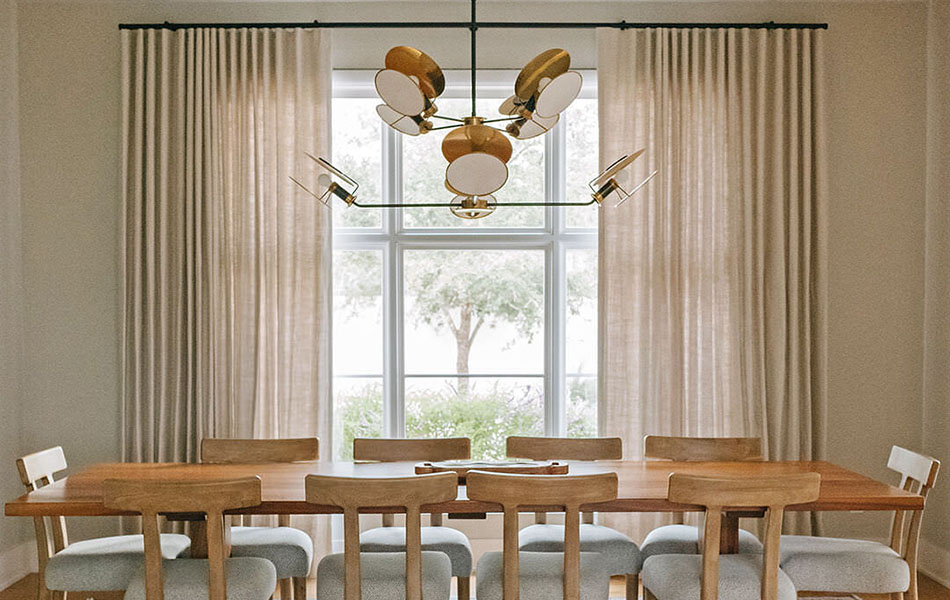
Sometimes, the rod itself can detract from the beauty of the fabric. This is where decorative cornice boards come in. A cornice is a hard, box-like structure placed above the window that hides all the mounting hardware and the top edge of the curtain itself. They can be upholstered in fabric, painted, or carved wood.
Cornice boards are traditional and work extremely well with formal curtain styles, like the Pinch pleat drapes. They give the window a truly architectural feel, almost like it’s a built-in feature of the room rather than an addition.
If you’re going the cornice route, make sure the width extends well past the window frame, just like you would with the rod. This helps keep the window treatment from feeling squished. While cornices require a bit more effort to install than simple finials and end caps, they offer a clean, tailored finish that looks incredibly high-end.
For rods, don’t overlook those small decorative caps on the ends. Finials come in every material imaginable—crystal, carved wood, ceramic, metal—and they are a cheap way to add flair. If you have subtle, plain curtains, use a detailed finial to bring in texture and light. If your curtains are already busy or colorful, opt for a simple, round end cap in a matching metallic finish.
The entire installation, from the height of the rod to the material of the curtain, is really about creating a polished presentation. It makes a huge difference to the dining experience. For more detailed advice on rod placement for different window shapes, check out resources from organizations like the National Association of Interior Designers. ASID (American Society of Interior Designers).
Frequently Asked Questions
Do dining rooms need blackout curtains?
Typically, no, dining rooms do not need true blackout curtains unless you also use the room as a media room or frequently host daytime sleepovers. What you likely need is a heavy lining or thermal efficiency liner, which blocks light and offers excellent privacy at night. Sheer curtain ideas for brightly lit dining spaces can work during the day, but you’ll need that secondary privacy layer for evening meals.
What are the best curtain styles for formal dining rooms?
The best styles for a formal look are Pinch pleat drapes or custom Roman shades in luxurious fabrics like silk, damask, or heavy velvet drapery. These styles offer structured tailoring and a classic appearance. Ensure they are lined, preferably with a weighted hem, so they fall beautifully.
What color curtains make a dining room look bigger?
To make a dining room look bigger, choose curtains that are close in color to your wall paint. Light, cool tones (whites, creams, light grays) are always notable for expanding a space visually. Avoid sharp contrasts unless your room is already quite large.
Are grommet top curtains appropriate for a dining room?
Yes, grommet top curtains are a fantastic, modern option. They are generally considered more casual than pleated styles, but if your dining room ability leans toward contemporary, industrial, or minimalist design, they are perfectly suitable. They are also incredibly practical because they slide so easily.


Leave a Reply