

Well, hello there. If you’re standing in your kitchen right now, maybe swatching paint chips and feeling a little nervous about taking the color plunge, you’re not alone. I get it. Painting cabinets is a huge commitment, and while white has reigned supreme forever, there’s this stunning trend that just won’t quit: blue kitchen cabinets.
Look, blue isn’t a flash-in-the-pan fad. It’s a classic color with serious staying power. But selecting the right blue—and more importantly, knowing how to style it so it feels fresh and personal, not dated or overwhelming—that’s where the real work begins. We need to figure out everything from the finish to the brass cabinet hardware.
I’ve spent years helping homeowners make these decisions, and trust me, there are a few simple tricks that make the difference between a kitchen that looks like a masterpiece and one that feels a little muddy. Let’s dive in and make sure you feel totally confident in choosing your dream blue kitchen.
Key Takeaways
The Spectrum of Blue: Finding Your Perfect Shade
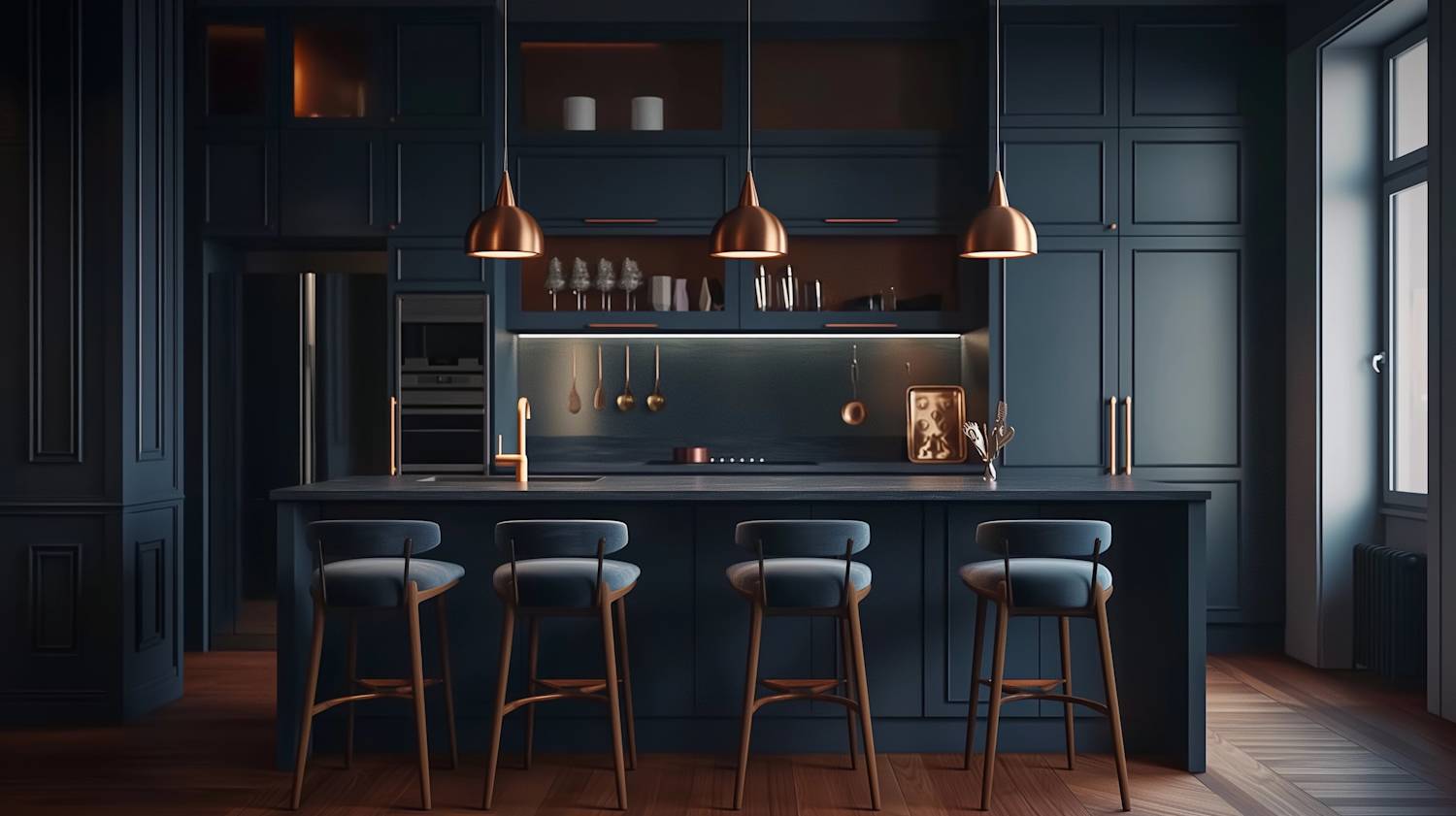
Image credit: www.gvdrenovationsinc.com
The first step, and honestly the biggest, is figuring out which blue you’re bringing into the room. Blue is incredibly varied, and the shade you pick dictates everything else—the wall color, the lighting, and even the feeling you get when you walk into the space.
When most people think of blue cabinetry, they picture the dramatic, elegant choice: navy blue shaker cabinets. Navy is truly wonderful because it acts almost like a neutral. It offers depth and sophistication without feeling sterile like black or gray. If you choose a dark blue, you’re making a statement about permanence and tradition, but you need plenty of light to keep it from feeling like a cave.
On the flip side, we have light blue base cabinets. Think soft, almost coastal shades—a color that might remind you of the morning sky or a dusty piece of sea glass. These lighter tones are fantastic for smaller spaces or rooms that don’t get much natural sun because they bounce light around beautifully. They lend themselves perfectly to a bright coastal kitchen design, especially when paired with natural wood finishes.
I’ll never forget when I was helping a client choose between a glossy royal blue and a matte blue finish. We painted two large sample boards and put them side-by-side in her kitchen. In the evening, the glossy one looked lively, almost electric, but during the day, the sun glare made it impossible to look at without squinting. That’s when I learned the importance of the finish—especially with darker colors. Matte blue finish doors hide fingerprints better and absorb light for a softer, more sophisticated appearance.
Hardware Harmony: Gold, Silver, or Black?
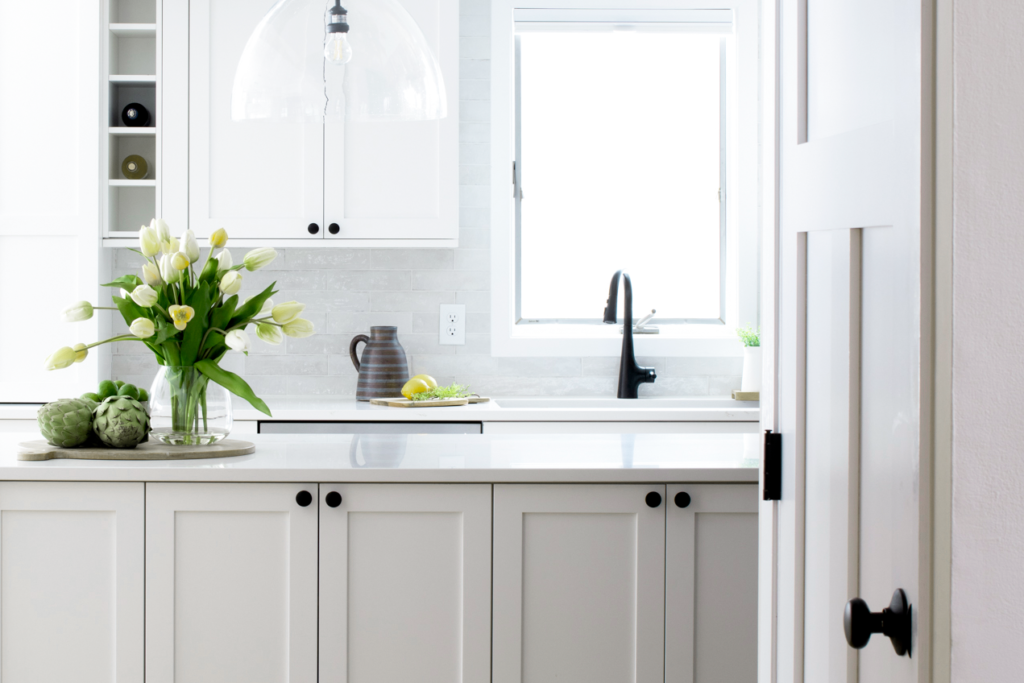
Image credit: decorcabinets.com
Once the paint color is settled, the hardware is your next big decision. These tiny details are like the jewelry of your kitchen; they can absolutely make or break the final look. The question is often: should I choose gold or silver hardware for dark blue cabinets?
My answer? It depends entirely on the atmosphere you want to create.
If you’re going for warmth, modernity, and a little bit of unexpected glamour, brass cabinet hardware is where it’s at. The way the warm, coppery tone of the brass contrasts with the cool, deep tones of the navy blue shaker cabinets is simply stunning. It provides a visual pop that silver can’t quite match. When you open a cabinet, the slight, satisfying weight and the subtle, clean sound of a strong brass handle moving against the wood—that’s sensory grounding; it tells you this is quality.
If you prefer a cleaner, perhaps more industrial or understated feel, then brushed nickel or silver pulls are your friend. They tend to blend into the design a bit more, letting the blue color remain the undisputed star. For light blue base cabinets, brushed nickel feels crisp and clean, contributing to that airy coastal kitchen design.
Pro Tip: Don’t underestimate the power of contrast in your hardware choice. If you have deep, dark navy cabinets, use a bright, chunky hardware—like unlacquered brass or satin gold. If your cabinets are a dusty light blue, choose matte black pulls for an immediate shot of modernity that grounds the ethereal color.
Countertop Chemistry: Pairing Blues with Surfaces

Image credit: www.decoranddecor.com
This is where things can get dicey. Choosing the best countertop materials to complement navy cabinetry requires a delicate touch. You need enough contrast to see the cabinet color clearly, but not so much that the kitchen feels busy or jarring.
For dark blue cabinets, you really can’t go wrong with white quartz countertops. Quartz is wonderful because it’s so durable and its bright, clean white surface makes the navy look even richer and deeper by comparison. If you want something a bit warmer than pure white, look for a quartz or marble with very light gray or cream veining.
For light blue cabinets, I often recommend going darker or richer on the counter surface, or at least choosing a surface with more movement. A light gray granite or even a darker butcher block can offer the grounding weight that the light blue uppers and dark blue lowers might otherwise lack. It provides visual anchor points.
If you’re leaning into a traditional look and incorporating a farmhouse sink, consider pairing your blue cabinetry with soapstone. Soapstone has a soft, matte black appearance that gives the space a wonderful, old-world patina. Plus, it only looks better the more you use it, which is something I deeply appreciate in a working kitchen.
Walls, Floors, and Backsplash: Making the Look Complete
:strip_icc()/505HickmanSt.0268_preview-59b8097b4d704af7b21c4127950822b4.jpg)
Image credit: www.bhg.com
Once the cabinets are installed, your walls, backsplash, and flooring play a huge supporting role. They determine if your blue kitchen cabinets sing or just sort of hum.
If you have upper cabinet storage that is also blue, you absolutely need light on the walls to prevent the kitchen from shrinking. A classic subway tile backsplash in white or cream is often the answer here—it’s clean, reflective, and lets the cabinet color take center stage. For a slightly different feel, consider a handmade zellige tile; the subtle color variations and textured surface will catch the light and add depth.
Choosing the right wall paint colors can be tricky. Look, I’ll be the first to admit—this is the part I still struggle with sometimes, especially when dealing with those tricky greenish-blues like teal blue paint codes. You want a paint that complements, not clashes.
A good rule of thumb is to stick with warm neutrals for the surrounding walls:
- Warm Off-White: Provides a gentle contrast that keeps the room airy.
- Light Beige or Tan: Excellent for bringing warmth to starker navy cabinets.
- Muted Light Gray: Works well if you want a subtle, modern feel, especially with a matte blue finish.
- Pale Pink or Terra Cotta (Used Sparingly): This unexpected pairing creates a surprisingly sophisticated contrast with dark blue.
If you’ve opted for a two-toned kitchen—say, light blue uppers and dark blue lowers—the backsplash should almost always be a unified, neutral field to provide visual rest between the two shades. Don’t try to introduce a third color or pattern there; it just complicates things unnecessarily.
The walls should be the quietest element in the room.
Thinking Outside the Box: Blue Cabinetry Styles
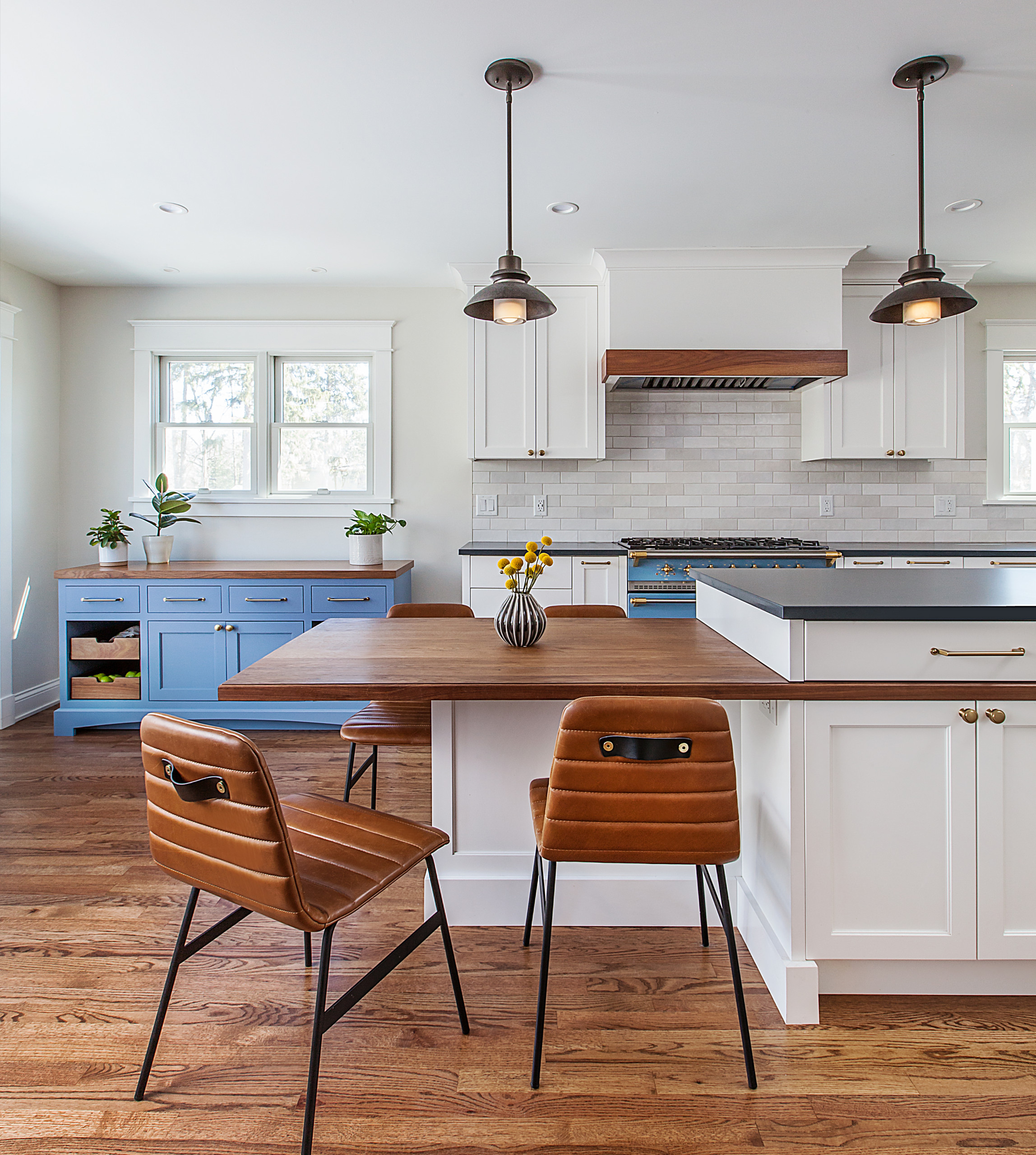
Image credit: www.houzz.com
Blue cabinets aren’t just for traditional kitchens anymore. You can make blue shaker cabinets look modern or industrial depending on the details you choose. It’s all about mixing textures and materials. For example, if you want that modern look, opt for flat-panel doors instead of traditional shaker style, and ditch the upper cabinet storage for open shelving or glass front doors.
We’re not just talking about custom millwork here, either. You can absolutely buy inexpensive stock blue kitchen cabinets and dress them up with high-end hardware and lighting. That’s often a far smarter way to go if budget is a concern.
If you’re deciding between different styles, here’s a quick overview of how the details change the mood:
| Kitchen Style | Recommended Blue Shade | Hardware Style | Countertop/Backsplash |
|---|---|---|---|
| Modern Farmhouse | Dusty, Light Blue (or Teal) | Matte Black or Pewter | Butcher Block or Plain White Quartz |
| Classic & Timeless | Deep Navy or Royal Blue | Unlacquered Brass or Satin Gold | Carrara Marble or Light Granite |
| Coastal Refresh | Pale Sea Blue or Gray-Blue | Brushed Nickel or Glass Knobs | White Subway Tile Backsplash |
| Industrial Chic | Dark Gray-Blue | Simple Bar Pulls (Steel or Black) | Concrete or Dark Granite |
Are Blue Kitchen Cabinets Going Out of Style?
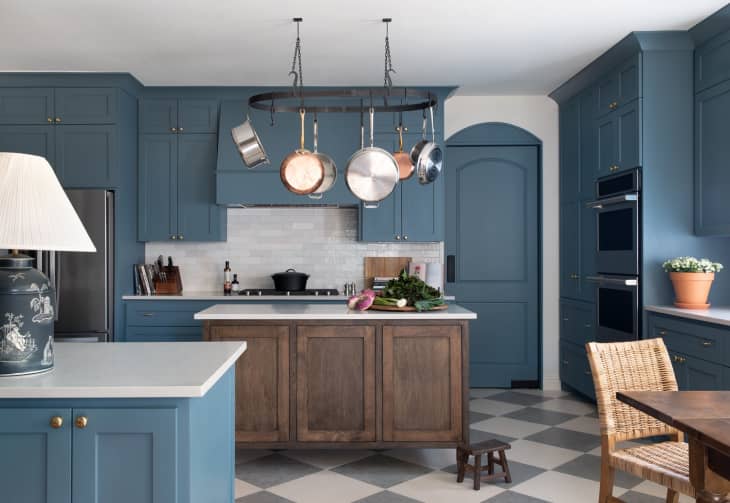
Image credit: www.thekitchn.com
This is the million-dollar question, isn’t it? When you’re spending this much time and money on a fixed element like cabinetry, you want to be sure it lasts longer than the next design cycle. Are blue kitchen cabinets going out of style?
Honestly, no. And here’s why: blue is fundamentally linked to nature (the sky, the sea) and is often associated with feelings of calm and trust The psychology of blue color in design. It’s been a popular color in interior design for centuries, not just the last five years. While certain shades—like that electric cobalt we saw briefly in the 90s—may date themselves, the major players, like navy and muted light blues, are classics.
A rich, dark navy blue is basically the new black in the kitchen design world. It’s sophisticated, it hides wear well, and it provides a beautiful grounding effect that plain white can’t offer. If you stick with clean lines, like classic shaker doors, and pair your blue with timeless materials like white quartz countertops and simple brass cabinet hardware, your kitchen will look fresh for years.
Practical Matters: Care and Keeping
:strip_icc()/CaptureOneSession24597-da28725d90b8456eac738e309ccb7cab.jpg)
Image credit: www.bhg.com
It’s important to talk about the reality of living with color. Dark blue cabinetry, especially a matte blue finish, is incredibly forgiving when it comes to minor scuffs and daily grime. That said, cleaning colored cabinets is slightly different than cleaning white ones.
You need to be careful with harsh chemicals, especially ammonia-based cleaners, as these can dull the finish over time, particularly on factory-painted stock blue kitchen cabinets. For how to clean matte blue kitchen cabinet doors effectively, stick to mild soap and water.
I suggest using a soft cloth, slightly dampened with warm water and a tiny bit of dish soap. Wipe down the doors gently, making sure to pay attention to the areas around the hardware where grease tends to accumulate. Then, immediately wipe them dry with a microfiber cloth. This two-step process—wash and dry—is the absolute best way to keep that matte finish looking velvety and beautiful without streaking or dulling the paint Caring for painted kitchen cabinets.
Your beautiful blue kitchen deserves gentle treatment.
Frequently Asked Questions

Image credit: plainenglishdesign.com
What wall paint colors go best with light blue kitchen cabinets?
For light blue cabinets, stick to very warm, neutral walls. Think soft creams, linen white, or pale taupes. These colors keep the overall space light and airy, leaning into that coastal kitchen design feel, while still allowing the blue to stand out beautifully.
What backsplash tile pairs best with light blue uppers and dark blue lowers?
When you have a two-tone kitchen, the backsplash should be unified and quiet. A simple white subway tile backsplash is the safest and often the best choice, as it provides a clean line between the contrasting upper and lower cabinets without introducing visual competition.
Is it okay to use only blue on the island cabinetry and leave the perimeter cabinets white?
Absolutely, yes. Using a dark navy blue just on the island cabinetry is a highly popular and effective way to introduce color without overwhelming the room. The blue island cabinetry grounds the space, provides a dramatic focal point, and contrasts strongly with surrounding white quartz countertops.
Where can I find inexpensive stock blue kitchen cabinets?
Many major home improvement stores and RTA (Ready-to-Assemble) cabinet sellers now offer stock blue kitchen cabinets, particularly in the navy blue shaker cabinets style. Look for vendors who specialize in pre-finished doors; this is often much cheaper than having plain wood cabinets custom painted.
So, what blue are you leaning toward? Are you ready to take the plunge into a moody navy, or is a bright, cheerful light blue more your style?


Leave a Reply