

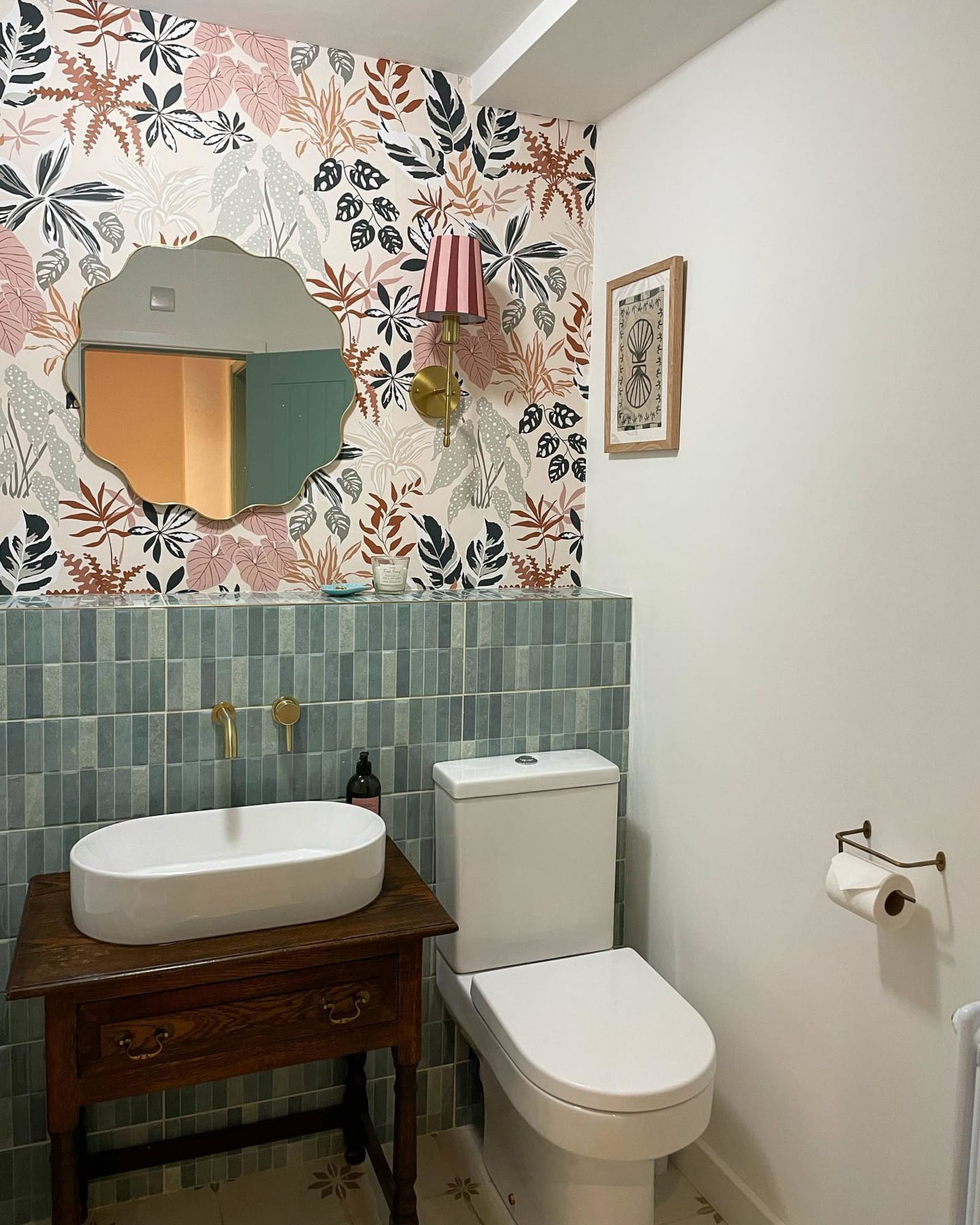
Well, if you’re anything like me, you see a washroom—whether it’s a tiny powder room or a full guest bath—as a blank canvas just begging for some personality. For years, we were told to stick to paint in bathrooms, mostly because of the moisture situation. But honestly? Times have changed.
The options for washroom wallpaper ideas are better, tougher, and much more fun now. You don’t have to settle for boring, sterile white tiles just because of a little steam. We’ve got materials that can stand up to a high humidity environment without peeling off the wall like a bad sunburn.
The challenge isn’t whether you *can* use wallpaper, but figuring out how to choose the right material and the perfect pattern that doesn’t overwhelm a smaller space. I’ve spent countless hours wrestling with paste and trying to perfectly align geometric patterns, so trust me when I say I’ve learned a few things the hard way.
Let’s dig into the details, starting with the most important element: choosing the stuff that actually lasts.
Key Takeaways
Choosing the Right Material: Moisture Resistance is Everything
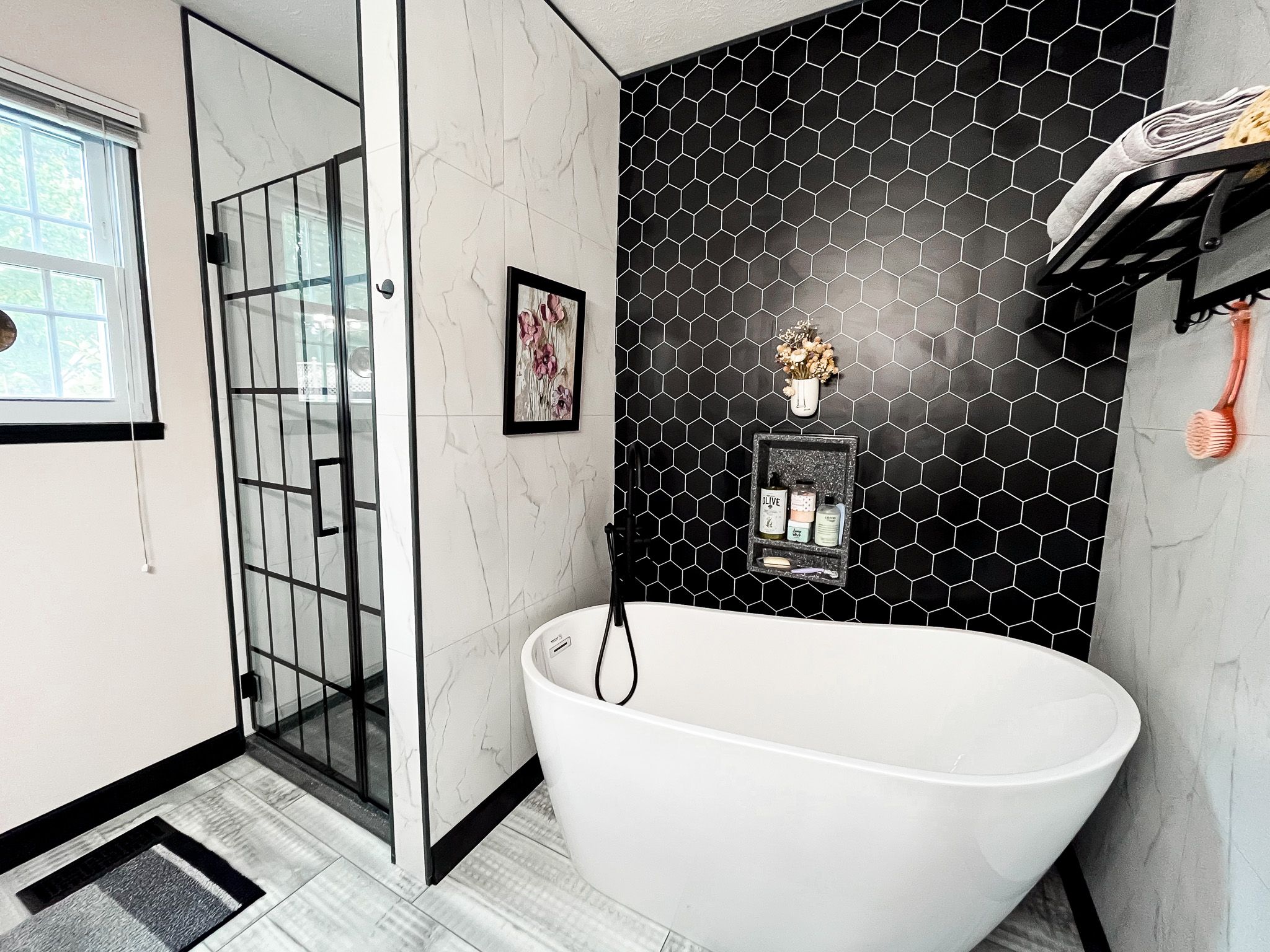
Image credit: innovatebuildingsolutions.com
Look, the first rule of washroom wallpaper is simple: don’t use regular paper-backed wallpaper in a bathroom with a shower. You’re just asking for trouble—mold, mildew, peeling seams, the works. If you’re decorating a guest washroom or a half bath (where humidity is usually lower, relying mostly on ventilation requirements), you have slightly more leeway. But if there’s a tub or shower, you need serious protection.
The good news is that manufacturers know this is a hot spot for design, so they make materials specifically for it.
The best options for high humidity areas are almost always vinyl wallpaper. Vinyl is naturally water-resistant because it’s a plastic coating over the backing. It’s also often washable, which is a bonus if someone accidentally splashes toothpaste on your beautiful new wall covering.
Here are the washroom wallpaper material types you should be looking for:
- **Solid Vinyl:** This is the heavyweight champion. It’s the most durable and resistant to moisture and scuffing. It’s perfect for kids’ bathrooms or full baths where steam is a constant factor.
- **Textured Vinyl:** A great option for hiding wall imperfections. The texture helps disguise seams and minor bumps in the drywall.
- **Non-Woven Backing:** While not as impervious as solid vinyl, non-woven wallpaper is breathable and holds up really well against humidity without encouraging mold growth. It’s often easier to remove later, too, which is a big plus if you change your mind often.
- **Peel-and-Stick Wallpaper:** A game-changer for renters and commitment-phobes. Most peel-and-stick uses a removable adhesive and is made of vinyl or a thick, water-resistant polyester fabric. It’s easy to work with and offers excellent moisture resistance for powder room spaces.
Avoid natural materials like true grasscloth. While I love the look of grasscloth, it’s porous and will sponge up moisture, leading to warping and potential mildew issues. Save those beautiful textures for the living room or a low-traffic hallway.
Washroom Wallpaper Ideas for Small Powder Rooms
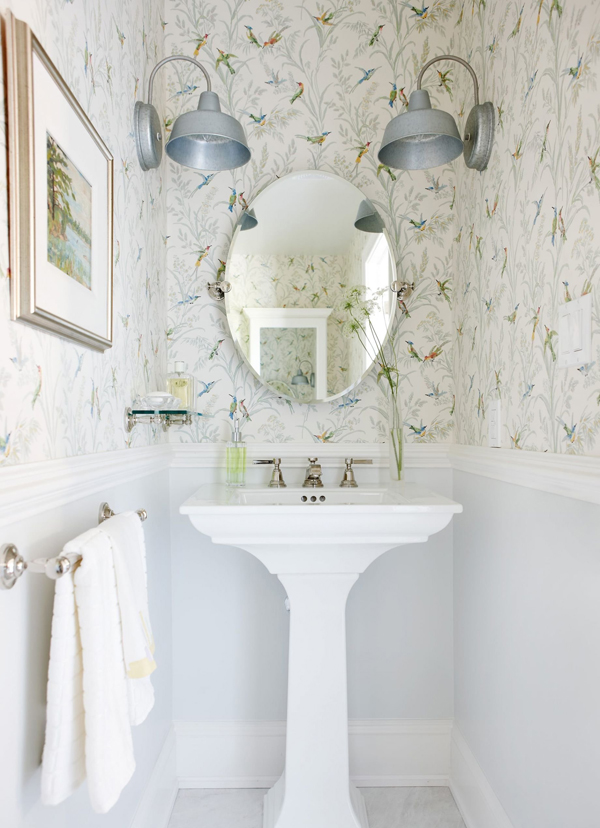
Image credit: www.fabricsandpapers.com
The small powder room—often known as the tiny half bath—is where you can really go wild without worrying about the design fatigue that might come from using a bold print in a larger space. Since these rooms lack natural light and are generally small boxes, they beg for drama.
We often think we need light colors to make a room feel bigger, but that rule doesn’t always apply to a washroom. Sometimes, leaning into the smallness with a dark, moody color or an intense pattern actually makes the room feel intentional and cozy, rather than cramped.
If you’re wondering what patterns make a tiny half bath look bigger, consider scale. A very large-scale pattern—like oversized, modern floral wallpaper designs—works surprisingly well. Why? Because your eye can’t register the entire pattern repeats, making the walls feel limitless. Conversely, very small, dense patterns can sometimes create a busy effect that closes the walls in.
If you prefer something traditional, look at classic William Morris designs. The intricate, botanical prints offer incredible depth and sophistication, turning a simple washroom into a little jewel box.
When it comes to coverage, should I wallpaper all four walls in a small WC? Absolutely, yes. In a small space, wallpapering all four walls removes the boundaries between surfaces and creates a fully immersive experience. Trying to wallpaper just one accent wall in a washroom often looks like you ran out of material or got scared halfway through. Commit!
DIY Installation Tips: Mastering Peel-and-Stick Wallpaper

Image credit: www.onsuttonplace.com
I know this can be tricky, especially if you’re new to the wallpaper game. Installing wallpaper, particularly the newer peel-and-stick options, requires patience, precision, and a steady hand. But honestly, if I can do it, you can too.
I’ll never forget my first attempt with removable adhesive peel-and-stick wallpaper in my own guest washroom. I was so cocky, thinking, “It’s just a giant sticker!” I slapped the first strip up, stood back, and realized it was skewed about half an inch off plumb. That slight tilt magnified with every subsequent strip, throwing the whole geometric pattern completely out of whack by the third panel. I had to rip it all down, clean the wall, and start over—a costly lesson in using a level and marking your plumb line *before* you stick anything permanently.
That experience taught me that the prep work is half the battle. You need smooth walls and a clean surface. Get yourself a good smoother tool—the plastic kind with a felt edge—and a seam roller.
The key to durability, even with peel-and-stick, is proper adhesion and seam management. Moisture attacks weak spots, and the weakest spot is always the seam.
Pro Tip: When installing any washroom wallpaper, especially vinyl wallpaper, you must butt the edges of the strips up against each other without overlapping them. Overlapping creates a raised edge that will inevitably catch moisture and lift over time. Instead, use a seam roller to press the edges firmly together, creating a nearly invisible join that water can’t penetrate.
When you’re pressing out the bubbles and making sure every inch of the removable adhesive is bonded to the wall, you can feel the pressure of the tool against the drywall. When you run the smoother tool down the strip, there should be a satisfying *thunk* against the wall, confirming that the material is tight and ready to stand up to the humidity. This simple act of ensuring a perfect seal is what separates a long-lasting job from a weekend project gone wrong.
Using Geometric Patterns and Bold Designs
:strip_icc()/Bathroom-swan-wallpaper-4k0De2hxaWhBNtPzblr6yr-617bd31bc70e47288facae556cfbdbc6.jpg)
Image credit: www.bhg.com
Geometric patterns are currently one of the most popular washroom wallpaper ideas, and for good reason. They are clean, modern, and provide a huge visual punch in a small area. Whether you choose a simple repeating hexagon or a complicated deco fan, these patterns instantly make the room feel updated.
When selecting a geometric wallpaper, consider the color temperature. Do you want something cool and crisp (think navy and white, or charcoal and silver) or something warmer (like burnt orange and cream)? Trending colors and prints for washroom wallpaper 2024 lean heavily toward deep, moody greens and rich blues paired with metallic accents. If you pair a bold, dark geometric print with bright white trim and fixtures, you get this incredible contrast that feels rich and expensive.
Now, choosing a busy pattern is fun, but aligning it perfectly across multiple strips is where the real headaches begin. Look, I’ll be the first to admit—this is the part I still struggle with sometimes. Trying to line up a complicated trellis or damask pattern perfectly on a wall that is rarely truly square can test the patience of a saint. My advice is to buy extra rolls, because you will inevitably waste some material cutting around windows and trying to find the perfect starting point for the repeat.
The payoff, however, is worth the effort.
A well-installed, perfectly matched pattern changes the entire mood of the space.
Remember that ventilation requirements matter just as much as your material choice. Even the best vinyl wallpaper will eventually fail if your bathroom is essentially a sauna six times a day. Make sure your exhaust fan is properly sized for the room and used consistently. Tips for controlling bathroom humidity
Pairing Wallpaper with Wainscoting for Visual Appeal
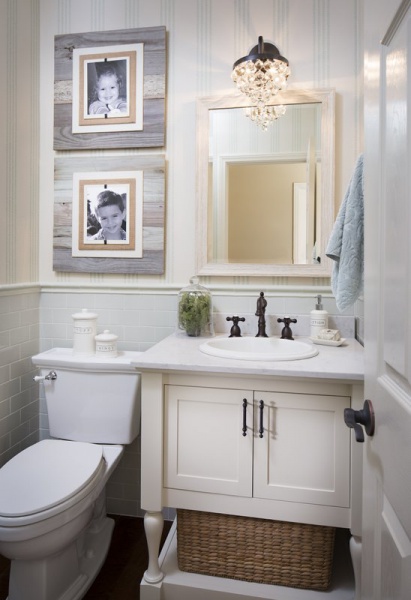
If the idea of wallpapering all four walls feels like too much commitment, or if you simply adore traditional architectural detail, pairing wallpaper with wainscoting is an outstanding solution. This combination provides a beautiful balance: the wainscoting offers durability and protection from splashes on the bottom half of the wall, while the wallpaper brings color and pattern to the top half.
This technique is especially effective in washrooms that see higher traffic or have pedestal sinks, where water droplets might hit the lower wall frequently. Since paint (or tile) covers the bottom two-thirds, you can often get away with using slightly less durable non-woven wallpaper above the wainscoting, opening up your design options.
The general rule of thumb for this look is to keep the wainscoting paneling a neutral color, usually white or cream, and let the pattern on the wallpaper do the heavy lifting. This contrast allows the eye to focus purely on the design.
If you are using a subtle pattern, like a small repeating trellis, you can use a high wainscoting (about two-thirds up the wall) to make the room feel taller. If you are using an incredibly busy or dark print, keep the wainscoting lower, about thirty-six inches high, to provide a visual break and keep the room from feeling too heavy.
Maintenance and Longevity

Image credit: livetteswallpaper.com
The longevity of your washroom wallpaper depends heavily on two things: the quality of the installation and the environment itself. A high humidity environment demands frequent cleaning and monitoring.
For vinyl wallpaper, maintenance is usually pretty straightforward. You can often wipe it down gently with a damp cloth and mild soap. This is a huge advantage over traditional paper, which tends to stain and tear easily. Always check the manufacturer’s directions, though!
One thing people often forget is to inspect the seams near the ceiling and floor every few months. These are the spots where temperature fluctuations and settling tend to create small gaps. If you spot a seam lifting, address it immediately with a small amount of wallpaper seam adhesive. Catching it early prevents moisture from creeping underneath and ruining the entire panel.
Remember how we talked about ventilation? It’s not just about comfort; it’s about protecting your investment. Running the fan for at least 15–20 minutes after a hot shower is non-negotiable if you want your wallpaper to last for years. You’re simply removing the moisture that could otherwise degrade the adhesive and encourage mold growth between the wall and the backing. Understanding mold growth and moisture control in homes
Frequently Asked Questions
What is the best wallpaper for a small powder room?
For a small powder room (half bath), the best option is often textured vinyl or high-quality peel-and-stick vinyl. Since powder rooms don’t usually have a shower, the main concern is durability against splashes and ease of cleaning, which vinyl excels at. This space is also the perfect spot for bold geometric patterns or striking modern floral wallpaper designs.
How much does professional bathroom wallpaper installation cost?
The cost of professional installation varies wildly depending on your location, the complexity of the pattern (pattern matching takes more time), and the size of the room. Generally, you can expect to pay anywhere from $500 to $1,500 for labor alone for a typical washroom, not including the cost of the wallpaper itself. It’s often cheaper if you go the DIY route with removable adhesive wallpaper.
Can I use regular wallpaper in a bathroom with a shower?
I would strongly advise against using regular, non-vinyl wallpaper in a full bathroom with a shower. Regular wallpaper is designed for dry environments; the constant exposure to steam and high humidity will cause it to swell, peel, and potentially harbor mold and mildew behind the paper. Stick to solid vinyl wallpaper or textured vinyl for full baths to ensure moisture resistance.
Where can I buy peel and stick wallpaper suitable for bathrooms?
These days, peel-and-stick options suitable for bathrooms are everywhere! Look for specialized vinyl versions at major home improvement stores, online boutique wallpaper retailers, or big-box retailers. Crucially, always check the product description to confirm it is listed as “moisture resistant” or “washable” before purchasing for a high humidity environment.
***
Picking the right washroom wallpaper ideas doesn’t have to feel overwhelming. It all comes down to choosing the right material—vinyl!—and then being brave enough to pick the pattern that makes you smile every time you walk past that little room. Whether you go for subtle non-woven backing or an explosion of color with modern floral wallpaper, the goal is to make a statement.
So, what kind of risk are you willing to take in your washroom? Are you leaning toward a simple, sophisticated texture, or are you ready for the full drama of bold color and pattern?


Leave a Reply